
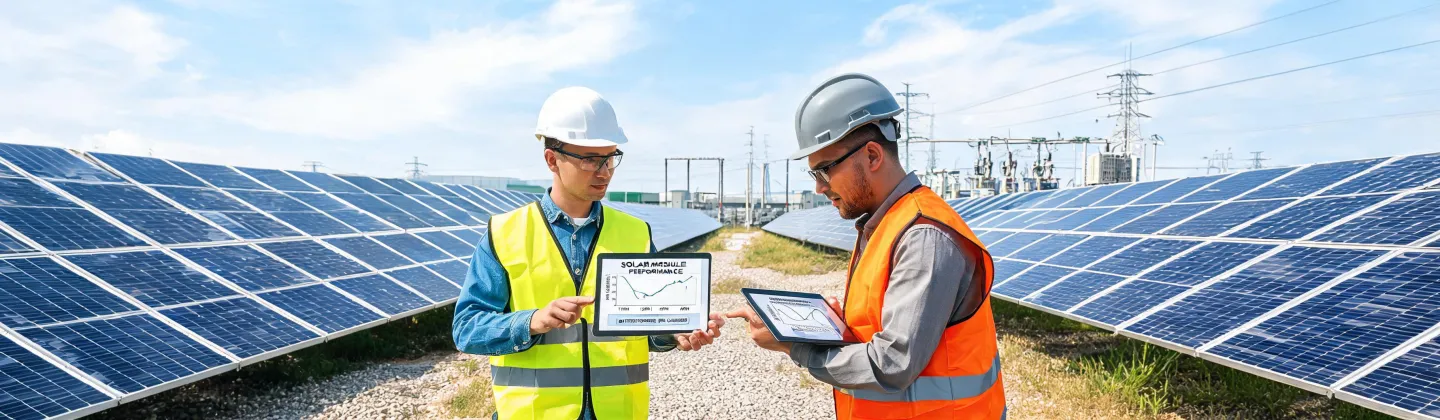
Price per watt is the most dangerous number in solar procurement. I know that sounds odd coming from someone whose job is literally comparing equipment quotes for a living, but I've got the receipts to back it up.
Since 2018, I've handled equipment purchasing for commercial solar and battery-storage projects at a US integrator. I've personally made — and, more importantly, documented — eleven significant buying mistakes, totaling roughly $34,000 in wasted budget. My first one happened in my first year on the job. The most expensive one happened in Q1 2024, and it's the reason our team now has a pre-order checklist that I update every time we find a new way to lose money.
Here's the opinion I've landed on: most solar buyers order the steps wrong. They optimize hardware price first, then try to force the rest of the system to fit. You should define the duty of the system and its compatibility constraints first, and treat price per watt as a tie-breaker, not as the headline number.
Mistake #1: I bought cheap small panels and paid for them twice
In May 2021, we had a telecom pilot that needed around 200 small panels. Every stakeholder asked the same question: how much does a small solar panel cost? The suppliers answered with cost per watt, and I did what too many buyers do with that number: I took the lowest quote.
The quote came in about 18% below the established brand we usually bought. On an $8,250 order, that felt like a win. The panels arrived on schedule, and that's where the good news ended. The boxes looked fine, but the electrical data didn't match the datasheet. The vendor had quietly changed the cell layout and updated only part of the product label. We tested 44 units and found the actual max power voltage was noticeably lower than the spec — enough to throw off our string sizing and push the charger outside its ideal operating window.
We ended up adding a second charge controller, rebatching the strings, and returning a partial shipment for replacement. Total extra cost was about $2,800, plus a two-week delay and a very awkward conversation with the project manager. The 18% discount evaporated. Honestly, I'm still not sure whether the vendor knew the datasheet was wrong. My guess is they did, but proving it wasn't worth the legal cost for a $8,000 order.
The lesson wasn't 'cheap panels are bad.' It was that I had skipped the steps that make price comparison meaningful. Small solar panels aren't commodities. Whether you're buying a 100W module for a telecom site or a 585W module for a commercial roof, you need current batch data, a sample test report, and a clear answer on who pays freight if the shipment doesn't match the spec. The 'small panel cost' is only useful once you know exactly what you're comparing.
Mistake #2: The DC battery disconnect switch was not just a part
In September 2022, we were installing a 100kW / 215kWh battery storage system. The budget was tight, and I was proud of how much we'd saved on electrical accessories. One of those accessories was the DC battery disconnect switch. On paper, the spec said it was rated for DC voltage and the nominal current was fine. I approved the order without digging into the test certificates.
During commissioning, the third-party engineer refused to sign off. The switch had the right voltage and current rating, but it didn't have the load-break and fault-withstand rating required for a battery circuit of that size. DC arcs don't self-extinguish the way AC arcs do. The switch might have worked for years — or it might have failed exactly when someone needed to disconnect under load. I don't know, and I don't want to find out.
The replacement cost us about $1,300 in restocking fees and expedited freight, plus nine days of delay and a damaged reputation with the commissioning team. That was the cheap part. The expensive part was the lesson that a $260 component can hold up a $400,000 project when you treat it like a commodity.
This came back to mind when I caught a Japan battery energy storage news today update about battery plants taking on more aggressive grid services. The market is growing fast, but the fundamentals don't change. Every new battery installation needs a properly rated disconnecting means on the DC side. If you're sourcing storage equipment, ask the battery vendor for their recommended DC battery disconnect switch list. Ask for the test report. If the manufacturer can't provide one, that's a red flag no price discount should cure.
Part of me wants to say the industry has gotten better at this. Another part knows I still see spec sheets with only voltage and current listed. My compromise is simple: the checklist now requires a copy of the switch's DC test certificate before purchase, not after.
Mistake #3: The Jinko Eagle panels were fine. My system assumptions weren't.
The worst mistake happened in Q1 2024. A client asked for a Jinko 585W solar panel price on a project that would include battery storage. We sourced a competitive quote for Jinko Eagle solar panels, and the price per watt looked great. I moved fast — too fast.
I had assumed that because the panels were a well-known Tier 1 product from Jinko-solar, the rest of the design would carry over from our previous projects. It didn't. The high-wattage Eagle modules have a different electrical profile than the older 550W modules we'd been using. When our engineer ran the cold-temperature voltage calculation, the string length I had planned exceeded the hybrid inverter's maximum input voltage. We had to shorten the strings, which changed the DC-to-AC ratio. That change reduced the charging capacity we had promised in the storage feasibility model.
Suddenly, the great module price was competing with a redesign, a lower revenue projection, and a client who wanted to know why the 'cheapest' option now required a bigger battery inverter. The Jinko Eagle panels were not the problem. I was the problem, because I had let price per watt dictate the sequence of decisions. The panel and the battery inverter need to be designed as one system, especially on DC-coupled storage projects. I should have asked for the inverter vendor's module compatibility list before placing the order, not after.
That was the mistake that created our pre-order checklist. Since then, we've caught 47 potential errors using it. Most are small. A few would have been expensive. None of them feel clever at the time, but they're a lot cheaper than another $34,000 tuition payment.
Price per watt still matters — just later
If you read all that and think I'm telling you to ignore price, let me correct that. Price per watt is a great tie-breaker. It's a terrible starting point.
In Q3 2024, we ran a proper comparison for a 1.2MW rooftop project. Two established manufacturers passed the technical review. Both had compatible dimensions, approved racking lists, and similar warranty terms. At that point, the price per watt difference mattered. We took the lower-cost option and saved a meaningful amount on the module purchase. That's how the process should work: eliminate the incompatible options first, then let price decide the winner.
I also want to be honest about the limits of a recommendation like this. I recommend Jinko Eagle panels for many commercial projects because they offer high efficiency, solid warranty support, and predictable supply. But if your site has unusual racking constraints, or if your installer has no experience handling large-format modules, the cheapest high-power panel in the world is the wrong choice. There's no universal best solar panel. There's only the best fit for your specific inverter, your storage architecture, and your installation crew.
Stop asking which panel is best. Ask which configuration will stop arguing with itself.
So the next time someone asks me how much a small solar panel costs, or what the Jinko 585W solar panel price is, I'll give them an honest answer. But first, I'll ask them a few questions about their charge controller, their battery voltage window, their mounting system, and their schedule. If the hardware doesn't fit together, the price per watt doesn't matter. I learned that the expensive way, and I'd rather you didn't.