
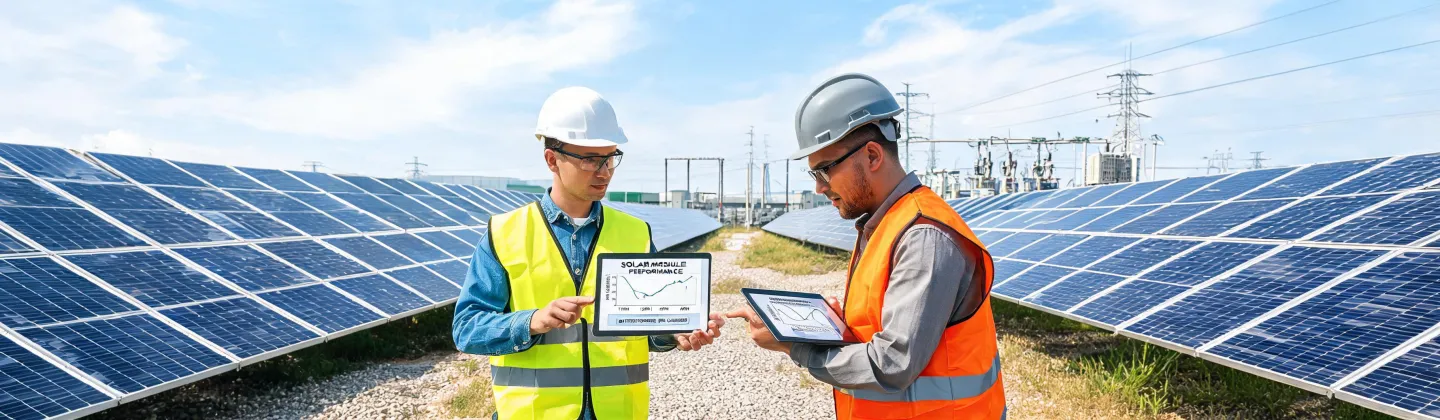
March 2024: The project that made me rethink solar procurement
In March 2024, I was sitting in our ops trailer, staring at a bill of materials for a 480 kW rooftop project at a cold-storage warehouse. I'm the office administrator for a 120-person commercial solar EPC. I manage material and service ordering—roughly $1.2M annually across 14 vendors. I report to both operations and finance. That means when a spec is wrong, I'm the one explaining the change order.
The client wanted bifacial solar PV. They also wanted a battery backup for the office and a mix of inverters for a roof with real-world shading. I'd read plenty of jinko solar panels reviews, and we'd used JinkoSolar panels on smaller jobs. But this was the first time I had to sign off on a full package: bifacial modules, a JinkoSolar battery, and an inverter architecture that included string inverters, micro inverters, and an 800 watt inverter for a gatehouse array.
The first plan: string inverters and Jinko panels
Our initial design was clean. JinkoSolar Tiger Neo bifacial modules on the main roof. JinkoSolar string inverters for the large arrays. A JinkoSolar battery for the office backup. It looked like a no-brainer.
Then our lead electrician walked the roof. He pointed at four HVAC units and a stairwell that threw shadows across about 18% of the array between 9 a.m. and 2 p.m. 'String inverters are going to drag down those shaded strings,' he said. 'You need to look at module-level electronics for those sections.'
That's when the solar string inverter vs micro inverter question stopped being academic. I'd heard the usual line: microinverters cost more upfront and aren't worth it on commercial roofs. Everything I'd read about commercial solar said string inverters win on $/W. In practice, for this specific roof, the math flipped. The shaded sections would have pulled down production on two strings. Microinverters on those sections cost more, but the modeled production gain paid back the premium in under four years. That was my first experience override on this project.
We ended up with a hybrid: string inverters on the open arrays, microinverters on the shaded sections. JinkoSolar didn't make the microinverters, and their rep didn't pretend otherwise. He said, 'That's not our strength. For those roof sections, here's what to look for in a module-level solution.' That honesty earned my trust for everything else.
The battery decision and the 800 watt inverter mistake
The JinkoSolar battery was the part I was least sure about. We'd installed batteries from other vendors, but not Jinko. I asked for data sheets, warranty terms, and certifications. Our AHJ required UL 9540 listing. UL 9540 is the safety standard for energy storage systems and equipment. Source: UL 9540. JinkoSolar's battery documentation listed the certification, and their technical team walked our electrician through the rapid shutdown and interconnection requirements.
Per NEC 690.12, rapid shutdown is required for PV systems on buildings. Source: NFPA 70, National Electrical Code. And for grid interconnection, IEEE 1547-2018 sets the standard. Source: IEEE 1547-2018. I'm not an engineer. I don't pretend to be. But I've learned to verify that the paperwork matches the code before I cut a purchase order.
Then there was the 800 watt inverter. It was for a small gatehouse array—four panels, nothing fancy. I thought it was a low-risk purchase. I found a cheap 800 watt inverter online and almost ordered it. Our electrician warned me: 'Check for UL listing. The AHJ will red-tag it.' I didn't listen at first. I only believed him after the inspector rejected the unit and we lost a week waiting on a replacement. That was my reverse validation moment. The 'cheap' 800 watt inverter cost us more in schedule delay than the listed unit would have cost upfront.
We replaced it with a properly certified 800 watt inverter from a distributor we trusted. The gatehouse array has been running fine since August 2024. But I still keep that rejection letter in my desk drawer. It's a reminder that my job is procurement, not electrical design.
What the JinkoSolar reviews don't tell you
When I read jinko solar panels reviews, most of them focus on efficiency, price, and warranty. Those matter. But for a B2B buyer, the real questions are different. Can the manufacturer provide the certification documents your AHJ wants? Can they support your EPC through commissioning? Do they know when to say 'that's not our product'?
According to JinkoSolar's public Tiger Neo datasheets, many of those bifacial N-type modules carry a 30-year linear power warranty. Source: JinkoSolar Tiger Neo datasheet. But you still need to confirm the exact model, revision, and warranty terms for your project. A review from 2023 might not match the 2024 datasheet. I've learned to download the current PDF from the manufacturer's site and attach it to the PO.
For the battery, JinkoSolar's documentation helped, but the UL 9540 listing was the deal-breaker for our AHJ. For environmental claims, the FTC Green Guides require that claims like 'recyclable' be substantiated. Source: FTC 16 CFR Part 260 (Green Guides). If a vendor can't show the backup, I don't put it in the proposal.
The result: a hybrid system and a better process
The project was completed in August 2024. The main arrays use JinkoSolar bifacial panels and string inverters. The shaded sections use microinverters. The office runs on a JinkoSolar battery during outages. The gatehouse uses a properly listed 800 watt inverter. Our monitoring shows the shaded sections performing close to the unshaded strings on sunny afternoons, which wouldn't have happened with a single string inverter architecture.
Would I specify the same system for every roof? No. That's the expertise boundary I've learned to respect. A specialist who says 'this isn't our strength' is more useful than a generalist who promises everything. JinkoSolar's rep didn't try to sell me microinverters. He told me where their products fit and where they didn't. That's why we now standardize on JinkoSolar for bifacial PV and battery storage, but we still spec inverters per roof.
If you're an admin buyer in solar, my advice is simple. Don't just read jinko solar panels reviews. Check the datasheets, the certifications, and the AHJ requirements. Compare solar string inverter vs micro inverter based on the actual roof, not the internet's default answer. And don't cheap out on a small 800 watt inverter—the inspection delay will eat the savings.
Bottom line: the best vendor isn't the one who says yes to everything. It's the one who tells you what they're good at, and what someone else should handle. That's a red flag in reverse—and it's the kind of partner I want on the next project.