
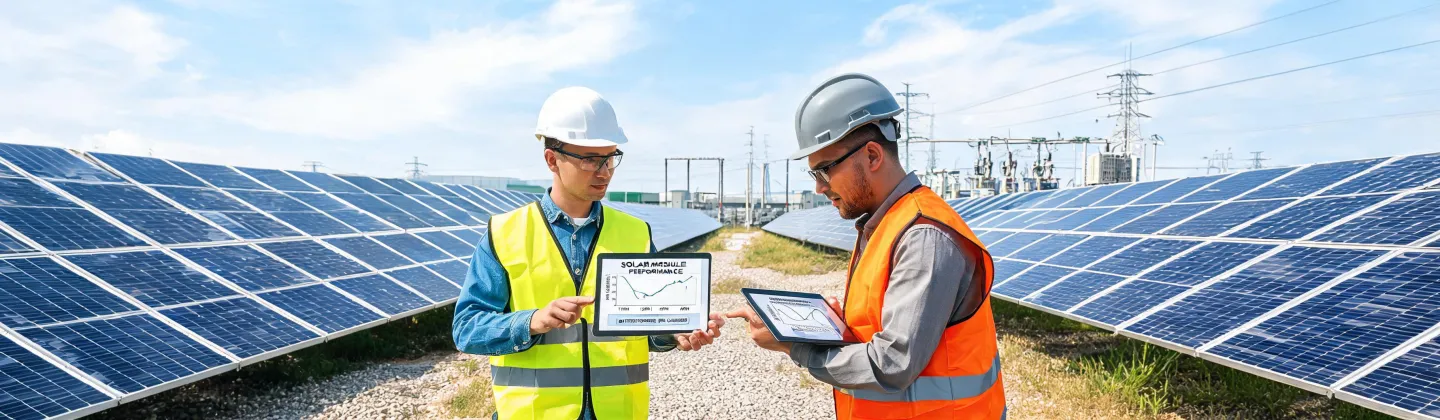
If you have a solar deadline measured in days, not months, here is the plain version: build around what is in stock, what fits standard racks, and what your crew can actually lift. My default in those situations is the Jinko 550W solar panel. The Jinko 550W solar panel dimensions on the mainstream half-cell version are 2278 mm x 1134 mm x 30 mm, and those figures matter more than a point of module efficiency. They tell you the module will fit existing 1500V racking, can travel on normal freight lanes, and won't be the reason a commissioning engineer stops the project.
That is often the first surprise: the fastest project is not the one with the highest efficiency panel. It is the one with the most ordinary supply chain.
Why I get this question
I coordinate urgent deliveries for renewable energy distributors and EPC teams. In eight years I have helped move over 200 rush orders to construction sites, emergency response depots, and mine camps. I don't have hard data on industry-wide lead times, but I have seen enough expedite requests to know which product specs make a schedule fragile. Jinko Solar modules keep showing up on my quick-turn specs because they are common enough to be stocked at multiple points in the supply chain. A distributor with regional stock beats a manufacturer with a 12-week customs clearance any day.
Jinko 550W vs Jinko 400W solar panel: choose the load plan, not the wattage
If I need fewer install labor hours and the site has equipment to move big glass, I pick the 550W. Fewer modules means fewer interconnects, fewer mounting points, and fewer trips up the ladder. If the site is a telecom cabinet, a roof with wind exposure, or a location where people carry modules by hand, I switch to the Jinko 400W solar panel. The current half-cell 400W I usually quote measures about 1722 mm x 1134 mm x 30 mm. It shares the 1134 mm width with the larger 550W, which helps racking compatibility, but the shorter board is a lot more forgiving when two installers are working above their shoulders.
I still kick myself for a job in 2023 where I pushed a larger module on a roof crew because it lowered cost per watt. The crew could not handle it safely in 30 mph wind. We lost half a day and almost lost a panel. Since then, my first question is not how much wattage a module makes. It is how many people will carry it, and how far.
Should you use a Jackery Solar Generator to bridge the gap?
If a client asks for a portable solar generator to keep the site alive until the main order lands, I do not laugh at it. I check the load sheet first. The Jackery Solar Generator 1000 v2 specs are a useful reference: around 1070 Wh of LiFePO4 storage, a pure sine wave AC inverter rated near 1500 W, and portability that makes it easy to throw in a truck. That unit is a great comms box, a great medical device backup, and a great night-light for a security trailer.
But one kilowatt-hour is not a construction power plant. A 1500 W heater or a 1 HP pump will flatten it in under an hour. If the site needs 30 kWh per day, scaling with small solar generators is the wrong move. You are better off with a few conventional solar modules, a battery bank, and a Magnum power inverter. That sounds less exciting, but it is the difference between a system that is good enough for a meeting and one that runs real loads.
Why Magnum inverters show up on my emergency specs
After modules, the highest risk on a fast install is the inverter. If it arrives with a firmware issue or a connector nobody can identify, you lose the critical path. That is why I often write Magnum power inverter into the spec before I approve the battery bank. I respect other brands, but for urgent off-grid and hybrid work I need a unit that has been commissioned by a lot of electricians and has spare parts available. Magnum MS series inverters have that history. They are not the lightest, and the menu interface is not exactly smartphone-smooth. I don't care. When the electrician is on site and the clock is ticking, familiarity beats cleverness.
Wait, what about wind turbines?
If you search for the largest renewable deployments, wind will show up before solar in many markets. Who has the most wind turbines? China, by a wide margin. Per the Global Wind Energy Council's 2024 report, China had the largest cumulative installed wind capacity in the world at the end of 2023. I still would not specify a turbine for an urgent project unless you are replacing parts on an existing installation. The reason is not that wind is bad. It is that a turbine is a foundation, a tower, a nacelle crane lift, an interconnection agreement, and a maintenance plan. A solar module is a flatbed shipment.
When I would push back on this advice
Not every rapid solar request should use the exact formula above. If your site has no full sun for weeks, solar panels alone will not solve it. If the load is above half a megawatt, you need a proper engineering review, not me picking modules over the phone. If you are installing on an occupied building with fire code reviews, the procurement speed is irrelevant. And if someone needs power for 48 hours only, renting a generator almost always beats buying solar. I have taken that side of the call too. Sometimes the right emergency answer is not solar.
One more caveat: dimension specs change with product revisions. The numbers I listed reflect common versions available in early 2025. Always verify against the current Jinko datasheet and your actual racking approval. I would rather have a customer correct my spec than miss a deadline.