
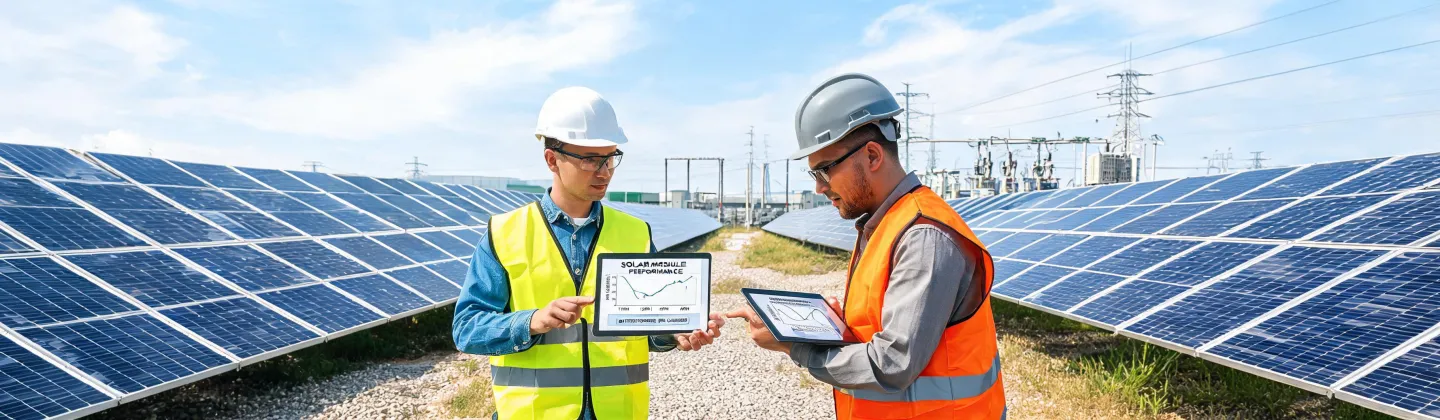
Before we get to the numbers: I'm the quality/compliance person who checks solar module and battery shipments before they reach customers. I've reviewed 200+ unique module batches annually for the past four years. I've rejected a batch because the frame tolerance was visibly off, and another because the labels didn't match the serial numbers. So I tend to read spec sheets with a suspicious eye. This guide isn't a Jinko sales pitch; it's how I'd evaluate the exact search terms you just typed.
Look, if you landed here with a mixed bag of searches—JinkoSolar, country of origin, 580W N-type, battery sizing—you're not confused. There are really three questions hidden in one: where are Jinko panels actually made, is a 580W N-type module the right spec for your roof, and how much battery storage does your house need? The last one especially has no universal answer. It depends on your grid, your loads, and your goal. So let's do this the way I'd run a quality review: break it into scenarios, then choose.
JinkoSolar Country of Origin: What the Label Tells You
If you searched 'jinko solar country of origin', the short answer is: JinkoSolar is a Chinese-founded company, but the module in front of you may not be made in China. Jinko has module manufacturing in China, Malaysia, and the US (Jacksonville, Florida) as of January 2025. A European order might come from Malaysia; a US project might be assembled in Florida. The label on the back tells you where final assembly happened. That's the 'country of origin' for customs and incentive purposes.
From the outside, country of origin sounds like a single line on a box. The reality is more like a supply-chain map. Cells can be made in one country, wafers in another, and final assembly in a third. I don't have hard data on the exact production share each quarter, but based on the purchase orders I've reviewed, the final assembly facility is what makes it onto the label. That's what matters when you need a certificate of origin.
Ask for the manufacturer's declaration or purchase order that states the country of origin. Don't trust a reseller screenshot. I once saw a listing say 'Spain' because the distributor was in Spain; the backsheet said Malaysia. That's a compliance headache if you're claiming domestic content. Jinko is often described as a Tier 1 manufacturer, which is a useful starting point. But Tier 1 lists change and say almost nothing about the exact pallet you're receiving. Verify the serial number against the factory code before you sign off.
The 580W N-Type 'Mono PERC' Confusion
Now let's tackle the exact search 'jinko 580w n-type mono perc solar panel'. I'll be blunt: that phrase mixes terms. The 580W Jinko panels in the current lineup are N-type TOPCon, not PERC. PERC is a p-type cell architecture—passivated emitter rear contact. N-type TOPCon is a different cell structure. A listing that says 'N-type PERC' is either using sloppy language or an outdated datasheet.
To be fair, PERC is still a proven and widely manufactured technology. But if you want a 580W panel with high efficiency, the module is almost certainly TOPCon. This distinction matters when you compare temperature coefficients and degradation warranties. TOPCon cells generally perform better in hot conditions. Check the datasheet under 'Cell' and look for 'N-type TOPCon.' I confirmed this on JinkoSolar's product page as of January 2025.
The 'mono' part is correct, by the way: these are monocrystalline N-type wafers. So a more accurate phrase would be '580W N-type mono TOPCon panel.' If a third-party seller insists on 'PERC,' ask them to send the original manufacturer datasheet. Five minutes of verification can save a procurement mistake that costs thousands.
Solar Panel Efficiency Formula (And a Quick Example)
Now for the part that helps you compare any panel: the solar panel efficiency formula.
Efficiency (%) = (Panel Power Output [W]) / (Panel Area [m²] × 1000 W/m²) × 100%
The 1000 W/m² is the standard test condition (STC) irradiance. For a 580W Jinko module with an area of about 2.7 m², efficiency works out to roughly 21.5%. Use the same formula on any datasheet. A 430W panel with a smaller area might actually have equal or better efficiency than a 580W panel. If your roof space is tight, efficiency matters more than raw wattage; if you have plenty of roof, a bigger panel with lower efficiency can be the better economic choice.
Why does this matter? Because people assume the highest-wattage panel is always better. The question isn't just wattage—it's how much energy per square meter you get, and how that fits your racking and inverter limits.
How Much Battery Storage Do I Need for My House? The Scenario-Based Answer
Now for the question everyone searches: 'how much battery storage do i need for my house'. There is no single size that fits all. I've seen a 10 kWh battery feel oversized because the home only needed a fridge and router, and a 30 kWh system feel undersized for an all-electric off-grid house. Let's split it into three scenarios.
Scenario A: Backup for Short Outages
You mainly want the lights, router, fridge, and maybe a well pump to keep running when the grid drops. If your outages are usually 2-6 hours, a 5-10 kWh usable capacity is enough for many homes. But you need to account for startup surges. A fridge can pull three to five times its running watts for a few seconds. If you ignore that, a 5 kWh battery with a 2.5 kW output may not start the compressor.
When you search for 'lithium battery sizes with pictures', remember that photos don't show terminal spacing, cable entry direction, or wall clearance. Those details matter in a tight garage. Look for the dimension drawing on the datasheet. A 5 kWh wall-mounted unit might be about the size of a large suitcase; a 10 kWh stackable unit with an inverter could take up a small cabinet. Measure the wall before you order, not after.
Scenario B: Solar Self-Consumption and Bill Reduction
You have solar panels and want to store daytime energy for evening. This isn't emergency backup; it's load shifting. A typical 5-8 kW rooftop array pairs well with a 10-15 kWh battery for a home that runs heavy loads in the evening. Here's the counterintuitive part: a larger battery isn't automatically better. If you install 20 kWh but your evening load is only 6 kWh, you're cycling less than half the capacity most nights—that's expensive unused metal.
Most buyers focus on capacity and completely miss C-rate and depth of discharge. A 10 kWh battery with a 5 kW inverter is not a 10 kWh backup system if your peak load is 7 kW. The question everyone asks is 'how big is the battery?' The better question is 'what power can it deliver, and what's the usable depth of discharge?' Look for C-rate: 1C means fully charged or discharged in one hour; 0.5C means two hours. For home backup, a lower C-rate is usually fine as long as surge loads fit.
Scenario C: Off-Grid or Long Outage Autonomy
You need 24+ hours of autonomy, maybe several days. This is a bigger calculation. Start with your worst-month average daily kWh, multiply by the days of autonomy you want, then divide by the usable depth of discharge. Example: 20 kWh/day × 2 days / 0.8 = 50 kWh rated capacity. Add a generator if you want a safety margin. Off-grid systems are often more about generation than storage; if the solar array can't recharge the battery after a week of clouds, a bigger battery will only delay the problem.
Don't hold me to this, but in my experience, people underestimate winter consumption by 30-50%. They count appliances and forget heat pump aux strips, pump cycles, inverter standby, and constant loads like modems. The fix is prevention: install an energy monitor for seven days before you size anything. Five days of measured data beats five minutes of guessing.
How to Tell Which Scenario You're In
If you're still unsure, run a quick self-check.
- Why do I want storage? Backup, bill savings, or independence?
- How long are my typical outages? Two hours or two days?
- What are my top three loads? A fridge, a sump pump, a heat pump, or all of them?
- Do I already have solar? What's my daily export?
Once you answer those, the selection becomes clearer. Reliable grid with short outages: 5-10 kWh. Solar time-shift with heavy evening use: 10-15 kWh. Off-grid or frequent long outages: 30-50 kWh plus a charging plan. If your situation sits between A and B, size toward the higher number—not for the sake of capacity, but to avoid discharging below 20% too often.
From my side of the warehouse, the biggest mistake isn't choosing the wrong brand. It's unverified assumptions. Check the country of origin on the label, confirm the panel technology against the datasheet, run the efficiency calculation, and measure your real load before buying a battery. Five minutes of verification beats five days of rework.