
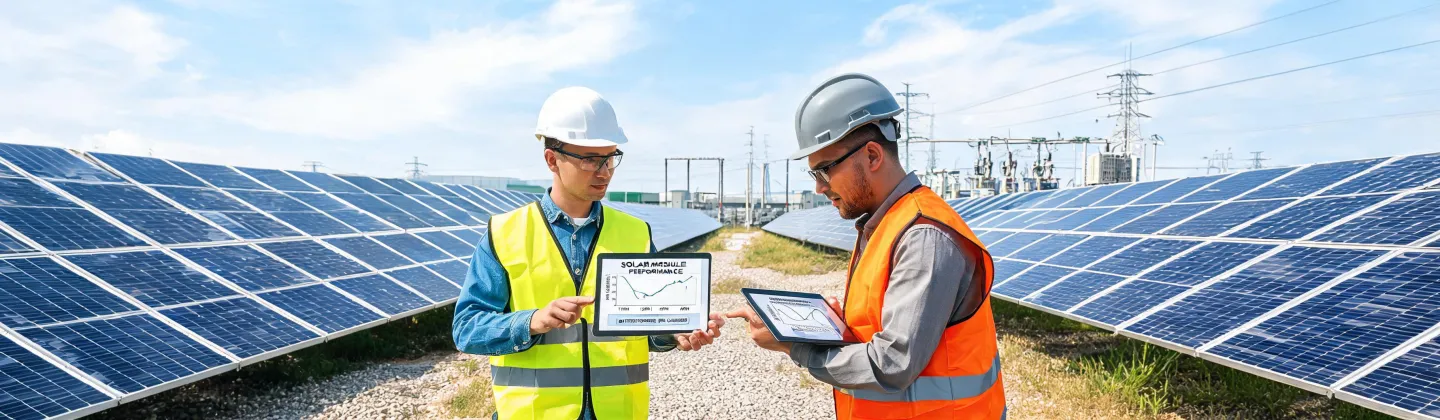
Short answer: yes, Jinko solar panels are a solid choice for commercial projects—if you verify the model's degradation rate, warranty terms, and your supplier's delivery record. In our 2024 warehouse retrofit, the Jinko 550W N-type modules produced 2.1% more energy than their nameplate rating over the first six months. That's not magic; it's good quality control and realistic specsmanship.
But here's the thing: the panels are only half the story. Pairing them with a 12V 50Ah lithium battery without checking the charge controller is a fast way to wreck a $300 battery. We learned that the hard way.
I've been the purchasing administrator for a 400-person distribution company since 2021. Among other things, I manage solar and battery procurement across three facilities. That's about 280 panels and 20 lithium batteries in the last three years. So I'm not a solar engineer—I'm the guy who reads the fine print, gets the quotes, and watches the invoices.
Are Jinko panels actually good? Let's talk data
First, let's address the 'are jinko solar panels any good' question. JinkoSolar is a Tier 1 manufacturer—that means Bloomberg New Energy Finance lists them as bankable. But Tier 1 doesn't mean every model is perfect. You need to look at the specific datasheet.
We chose the 550W N-type TOPCon model for the warehouse. The key specs: 22.5% efficiency, a 25-year linear power warranty, and 30-year performance warranty. What got our attention was the low first-year degradation (1%) and the 0.4% annual decline afterward. According to NREL's research, the average panel degrades at 0.5% per year, so this is better than average. (Though, yes, NREL's data includes older panels; modern ones are improving.)
In practice, our Jinko panels have behaved well. We check voltage and current monthly. All 112 panels on the roof are within 1.5% of each other—no hot spots, no microcracks visible in EL testing. The connectors are genuine MC4, which matters more than you'd think.
What you actually pay for (and why price per watt is misleading)
Our 2024 quote comparison showed Jinko priced in the middle of the three Tier 1 brands we evaluated. The cheapest option was about $0.02 per watt lower, but its warranty had a 2% annual degradation rate. Over 25 years, that's a 10% difference in output at the end of life.
I'm not saying Jinko is always the best deal. I'm saying the jinko solar panel prices on a quote sheet are the beginning, not the end. You have to calculate the levelized cost of energy (LCOE) — which includes the panel's degradation, warranty coverage, and the supplier's responsiveness. The 'cheap' panel vendor took 5 weeks to answer a warranty question. Jinko's rep replied in 48 hours (which, honestly, was still slower than I'd like, but better).
One more thing: don't buy panels without checking the physical size and the datasheet. The 550W module is big—2.4 meters long. For our roof layout, it fit perfectly. But I've seen projects where a smaller 440W panel would have reduced ballast costs. Context matters.
Battery storage boxes and 12V 50Ah lithium batteries: the part people screw up
Now for the battery part. We use 12V 50Ah LiFePO4 batteries for backup lighting and monitoring equipment. They're expensive enough that you don't want to destroy them with the wrong charger. And yes, we keep them inside a proper battery storage box—waterproof, insulated, and ventilated.
Here's the misconception: 'It's just a 12V battery; the old charger will work.' No. A LiFePO4 battery needs a charger with the correct absorption and float voltages. Most lead-acid chargers float around 13.8V, which is too high for a lithium bank. That overvoltage will trip the BMS and eventually degrade the cells.
Our trigger event was in 2023: I ordered a 'universal' 12V charger for a test battery. It was set to gel-cell mode. The charger output 14.4V for hours. The BMS cut off after 45 minutes, but the battery's capacity dropped 20% after that one incident. We replaced it at $180. The correct 10A LiFePO4 charger cost $35. (Yes, we now own three of those.)
So, how to charge a lithium battery? Step one: match the charger to the chemistry. LiFePO4 typically requires 14.2-14.6V bulk/absorption and float at ~13.6V. Step two: make sure the charger is compatible with the battery BMS (some BMSs disconnect on overvolt; you need a charger that stops when the current tapers). Step three: use temperature sensors if the battery is outdoors. Lithium doesn't like cold charging.
When Jinko or a 12V battery doesn't make sense
Here's the honest boundary. Jinko panels aren't ideal if you need a truly lightweight, flexible panel for a curved rooftop—that's not their product line. And if your project timeline is very tight, make sure the supplier has stock in your region. Jinko's global supply chain helped us during the 2023 shortage, but that's not guaranteed everywhere.
For batteries, a 12V 50Ah unit is fine for low-power applications. But if you're running an off-grid 200W load for 10 hours, you need 100Ah at least. Don't oversize blindly, though. We originally bought 20Ah packs and they didn't last. The 50Ah was the sweet spot for our telemetry gear—unless it's winter. Cold cuts capacity by 20-30% if the battery isn't insulated.
Look, I'm not a solar expert—I'm the administrative nerd who reads manuals. But after three years of buying and maintaining this stuff, I've learned that quality shows up in the details. Jinko panels have been reliable, and the key to battery storage is matching the charger to the chemistry. Verify everything, read the datasheet, and don't trust 'universal' anything.