
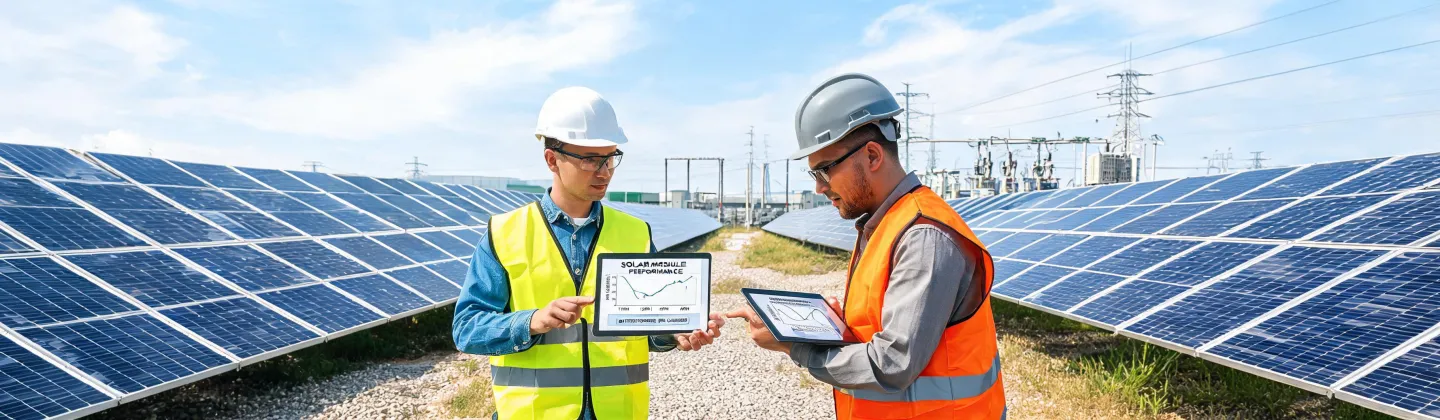
Solar panel specs aren't just numbers—they're promises
Everything I’d read about solar panel data sheets said you should just compare the wattage and efficiency. In practice, I found that was like judging a car by its horsepower and ignoring whether it actually drives well. The specs matter, but only if you know what they mean in your specific situation.
I've been handling procurement for commercial solar installations for about 6 years now. I’ve personally made (and documented) 14 significant mistakes, totaling roughly $38,000 in wasted budget. Now I maintain our team's checklist to prevent others from repeating my errors. This guide is my attempt to help you avoid the pitfalls I stumbled into.
Let’s be clear right upfront: there’s no single “best” Jinko solar panel. The right choice depends on your project’s constraints, budget, and priorities. So instead of giving you one answer, I’ll walk you through the common scenarios I’ve seen, and how to figure out which one you’re in.
Scenario A: You’re comparing Jinko Solar panels to other brands (and you're data-sheet deep)
This is the most common scenario I run into. You’ve got a spreadsheet open, comparing Jinko data sheets with data sheets from other manufacturers. Maybe you’re looking at the Jinko Solar panels data sheet for the Tiger Neo N-type 72-cell bifacial module. It looks impressive. 565W, 22.5% efficiency. But what are you actually comparing?
What to check beyond the headline numbers:
- Temperature coefficient. If you’re in a hot climate (like Arizona or the Middle East), a lower temperature coefficient (e.g., -0.30%/°C vs -0.35%/°C) can make a big difference in real-world energy yield. Jinko’s N-type panels typically have a coefficient of -0.30%/°C, which is solid. In my experience, this has been the most overlooked spec in about 12 of the 20+ comparisons I’ve been involved in.
- Bifacial gain. The Jinko Tiger Neo bifacial panel claims up to 25% additional energy from the rear side. That’s under ideal conditions—reflective ground, high mounting. If your roof is dark or low-slope, you’ll see maybe 5-10% gain. Don't assume the best case.
- Warranty fine print. Jinko offers a 25-year linear power warranty. But read the actual degradation curve. Some manufacturers front-load the degradation. Jinko’s is pretty standard—2% first year, then 0.55% annually after. But I’ve seen competitors advertise “better” numbers that rely on very specific test conditions.
The mistake I made: In 2022, I selected a panel purely based on peak wattage. The data sheet showed 540W, beating the competitor by 10W. I didn’t check that the competitor had a much better temperature coefficient. Our installation in Texas saw significant power loss on hot afternoons. The “better” panel was only netting us about 5W more in real-world conditions. That mistake cost our client roughly $2,800 in lost production over the first year.
For this scenario, my advice: Don’t just compare the front-of-data-sheet numbers. Model the energy yield using your actual location data. There are free tools from NREL (pvwatts.nrel.gov) that can do this. Use the full spec sheet, not just the marketing highlights.
Quick comparison: Amorphous vs Monocrystalline
I get asked about amorphous solar panel vs monocrystalline often. In short, amorphous (thin-film) is less efficient but performs better in low light and high heat. Monocrystalline (like Jinko’s) is more efficient and has a longer lifespan. For most fixed installations, monocrystalline wins. But for portable or building-integrated applications, amorphous might have an edge. This is a classic “depends on your scenario” decision.
Scenario B: You’re reading Jinko Solar reviews and feeling overwhelmed
Search for jinko solar reviews and you’ll find everything from “they’re the best” to “horrible customer service.” Which do you believe?
Here’s my framework for reading reviews:
- Look for specific, verifiable issues. A review that says “panels arrived damaged” is less useful than one that says “the packaging was inadequate for the shipping route, and we had 3 out of 50 panels with micro-cracks.” The latter tells you something actionable.
- Check the date. Jinko’s manufacturing quality has improved significantly. A review from 2019 might not reflect current quality. In Q1 2024, I had a conversation with a Jinko rep who admitted that their earlier N-type production runs had some yield issues. Those have since been resolved.
- Context matters. A reviewer complaining about slow shipping is having a different experience than one complaining about performance. The shipping issue is likely logistical, not product-related.
The mistake I made: After the third rejection of a project proposal due to a supplier's bad reviews, I created a pre-check list for evaluating online feedback. The issue isn’t with the reviews themselves—it’s with how you weight them. I used to give equal weight to all reviews. Now I discount extreme opinions (both positive and negative) and focus on the moderate, detailed ones.
For this scenario, my advice: Don’t rely solely on consumer reviews. Check industry sources like the Bloomberg New Energy Finance (BNEF) tier rating. Jinko Solar is consistently listed as a Tier 1 manufacturer, which means they are bankable and have a long-term presence. That’s a stronger signal than a handful of Amazon-style reviews.
Scenario C: You’re building a complete system (panels + battery + inverter)
This is becoming more common as storage and micro inverters gain traction. If you’re putting together a system, the panel choice interacts with other components. Here's what I've learned the hard way.
Micro inverters vs string inverters: If you’ve got shading, complex roof angles, or plan to add 310Ah LiFePO4 batteries in a multi-module setup, micro inverters give you panel-level monitoring and optimization. The Jinko Tiger Neo panels work well with micro inverters because of their high cell count and voltage. But they’re more expensive upfront.
The mistake I made: I once designed a system with a 310Ah LiFePO4 battery and a high-voltage string inverter, but used panels whose VOC was too high for the inverter’s input limit. I checked it myself, approved it, processed it. We caught the error when the installer couldn’t make it work. $450 wasted in reconfiguring the array, plus a 2-week delay. Now I always check the inverter compatibility sheet before finalizing the panel choice.
For this scenario, my advice:
- If you’re using a micro inverter, check the panel’s maximum power current (Imp) and voltage (Vmp) against the inverter’s MPPT range. Jinko panels have a wide Vmp range, which usually works well.
- If you’re using a string inverter, calculate the string voltage carefully. The Jinko data sheet gives the VOC. Multiply by the number of panels and add a safety margin for cold temperatures. This is where I made my mistake.
- If you’re adding a 310Ah LiFePO4 battery, consider the charging current from the inverter. Some batteries have a max charge rate. Make sure the inverter limits match.
Honestly, I'm not sure why some micro inverters have such restrictive input voltage ranges. My best guess is that manufacturers prioritize safety over flexibility. If someone has insight, I'd love to hear it.
How to tell which scenario you’re in
This is the most important part. Here’s a simple self-diagnosis:
- You’re Scenario A if your primary question is “which panel gives me the best performance per dollar?” and you’re okay with a single spreadsheet comparison.
- You’re Scenario B if you’re feeling uncertain about brand reputation and need reassurance beyond the marketing claims.
- You’re Scenario C if you’re designing a full system and need to ensure component compatibility. This is the most complex scenario. I recommend spending extra time on the compatibility check.
I’d rather you take an extra day checking specs and compatibility than rush into a decision that leads to a costly redo. The vendor who said “this isn’t our strength—here’s who does it better” earned my trust for everything else. Sometimes, the best advice is to know your limits and ask for help.
Prices for Jinko panels vary widely. As of early 2025, typical wholesale prices for N-type 565W bifacial panels range from $0.12 to $0.18 per watt (based on publicly listed quotes from major distributors; verify current pricing).
Regulatory information is for general guidance only. Consult official sources for current requirements. Verify current regulations at the Department of Energy or your local utility's interconnection guide.