
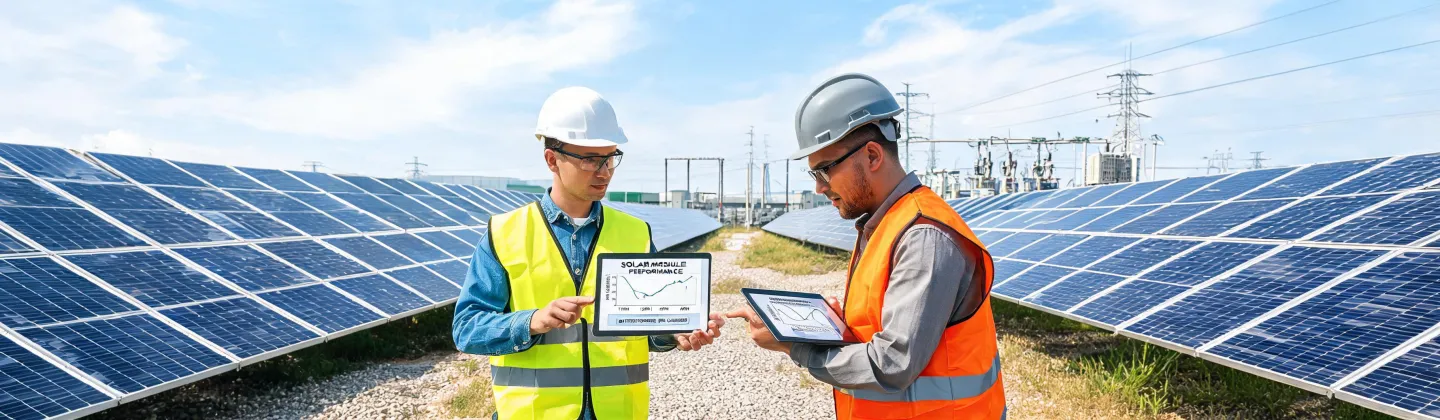
If you're shopping for a commercial solar parking lot system today, the short answer is this: I ordered 88 units of the JinkoSolar 550W (JKM-550M-72HL4-V) and paired them with a 5kWh LiFePO4 battery from Jinko's residential storage line to cover our overnight load. That's not a one-size-fits-all recommendation—our load profile is specific—but after months of RFQs, spec-sheet comparisons, and a painful initial mistake, it's the combination that made the most sense for my situation.
I'm not a solar engineer. I'm the office administrator who got handed the 'figure out the parking lot solar' project because I manage our facilities budget and vendor relationships. I process about 80 orders a year across 12 different service categories, and this was easily the most technically complex one I've faced. Here's why I ended up where I did, what I learned, and where my thinking might not apply to you.
How I Got Here & Why the Decision Changed
I didn't set out looking for JinkoSolar specifically. When I took over facilities purchasing in 2020, my approach was simple: get three quotes, pick the cheapest, move on. That worked fine for office supplies. It did not work for solar panels.
The first quote I entertained was from a smaller brand offering a 545W module at a price that was 17% lower than any Tier 1 manufacturer. I almost pulled the trigger. Then I did my due diligence—checking bankability reports, degradation warranties, and reading through industry forums. Everything I'd read about solar procurement said 'price per watt is king.' In practice, for a commercial installation that needs to last 25+ years, I found that a panel from a Tier 1 manufacturer with a proven track record of reliability justifies a premium, especially when warranty claims and long-term degradation are factored into the total cost of ownership. The 'cheaper' panel had a 0.55% annual degradation rate vs. Jinko's 0.40% for the N-type. Over 25 years, that difference is significant (we're talking about a 3.75% difference in end-of-life output). That was the moment my thinking shifted. I wasn't just buying hardware; I was buying a performance promise backed by a company that would still exist in 25 years.
The Core Setup: Why 550W Panels & a 5kWh Battery?
Our parking lot covers roughly 12,000 sq. ft. We're in a region with decent sun—about 5.2 peak sun hours daily average. The goal was to offset the lighting and security camera load for the lot itself, plus power a small EV charging station we installed for employee use.
The JinkoSolar 550W (N-Type)
This specific module (JKM-550M-72HL4-V) was chosen for three reasons, none of which are the raw wattage number:
- Efficiency & Temperature Coefficient: The N-type cell technology has a temperature coefficient of -0.30%/°C. That means in our summer heat (we see panels hitting 65°C), they lose less output compared to traditional PERC panels (which are typically -0.35%/°C or worse). In practice, this translated to an estimated 2-3% higher annual yield for our location. I'm not an engineer, but our solar installer confirmed this based on local weather data.
- Mechanical Load Rating: Our parking lot is exposed to wind and snow. The Jinko panel has a 5400 Pa snow load and 4000 Pa wind load rating. The alternative panels I looked at were rated lower. This mattered for our local building code.
- Warranty & Bankability: Jinko is consistently rated as a Tier 1 manufacturer by BloombergNEF. Their 30-year linear power warranty (with the 0.40% annual degradation) is industry-leading. When I presented this to our CFO, the bankability report was more persuasive than the watt spec.
One nuance I almost missed: The '550W' label is under Standard Test Conditions (STC). Actual output under our operating conditions will be lower. I had to learn this the hard way—don't expect to see 550W on your inverter display. Expect something closer to 475-500W per panel on a good day. This is normal. Manage your expectations accordingly.
The 5kWh LiFePO4 Battery (Jinko Brand)
Why a battery at all? We have net metering, but the parking lot lighting runs all night. Using grid power at night meant we were consuming cheap solar generation during the day and paying retail rates at night. The battery lets us shift that load. I chose the 5kWh LiFePO4 for its cycle life (rated for 6000 cycles to 80% DoD) and the safety profile of the chemistry. Lithium Iron Phosphate is significantly less prone to thermal runaway than other lithium-ion chemistries.
Is 5kWh enough? For our specific load (LED lights and security cameras drawing roughly 1.2kW overnight for 10 hours), we need about 12kWh of usable storage. We installed three units for a total of 15kWh nominal. If I'd only bought one, we'd have been running on grid power after 4 AM. The 5kWh unit is the building block—I'm not recommending you buy only one.
Where I Almost Went Wrong (And What I’d Do Differently)
I'm still kicking myself for underestimating the permitting process. I assumed the installer would handle everything. They did the structural and electrical engineering, but I was the one who had to submit the building permit application and coordinate with the utility for interconnection. If I'd known the utility review alone would take 8 weeks (this was back in early 2024), I would have started that process the day I signed the contract. That delay pushed our project completion past a critical budget deadline.
The other lesson? I didn't fully understand the value of having a spare module in the warehouse until a panel was damaged during installation (cracked frame from a dropped tool). We had to wait 11 days for a replacement because our distributor didn't have stock locally. I now include 2 spare panels in every solar order as standard. It's a $400 insurance policy against a 2-week delay.
When This Setup Isn’t the Right Call
I'm not going to pretend this is a universal solution. Here's where my choice breaks down:
- You don't need the battery if your net metering policy is generous. Some utilities offer 1:1 net metering where you can essentially use the grid as a free battery. Check your local policy before spending $4,000+ on storage.
- The 550W panel is overkill for a small residential installation. If you have a small roof with limited space, you might be better off with a higher-efficiency panel (like the 620W N-type bifacial) to maximize power density per square foot. Our parking lot had space to spare, so wattage density wasn't the primary constraint.
- LiFePO4 has a lower energy density than NMC. If space is extremely limited, NMC (Nickel Manganese Cobalt) batteries store more energy per pound. I chose LiFePO4 for safety and cycle life—not because it's the most space-efficient option.
Final Thoughts (And a Weird Non Sequitur)
At the end of the day, the JinkoSolar panels and LiFePO4 batteries have been running for 8 months now and have met our performance projections. The system paid for about 80% of our parking lot lighting load in the first quarter. I'm satisfied with the decision, but I'm also keenly aware of the context that made it work: a specific load profile, a favorable net metering agreement, and a location with good sun.
Oh, and one funny thing I learned during this project—someone asked me if the solar panels would help power a telescope to see Pluto. I had to gently explain that Pluto is about 39 astronomical units from the Sun, and our little 50 kW array on the parking lot roof wouldn't make much of a dent in space exploration. But it did make me appreciate just how vast our solar system really is.