
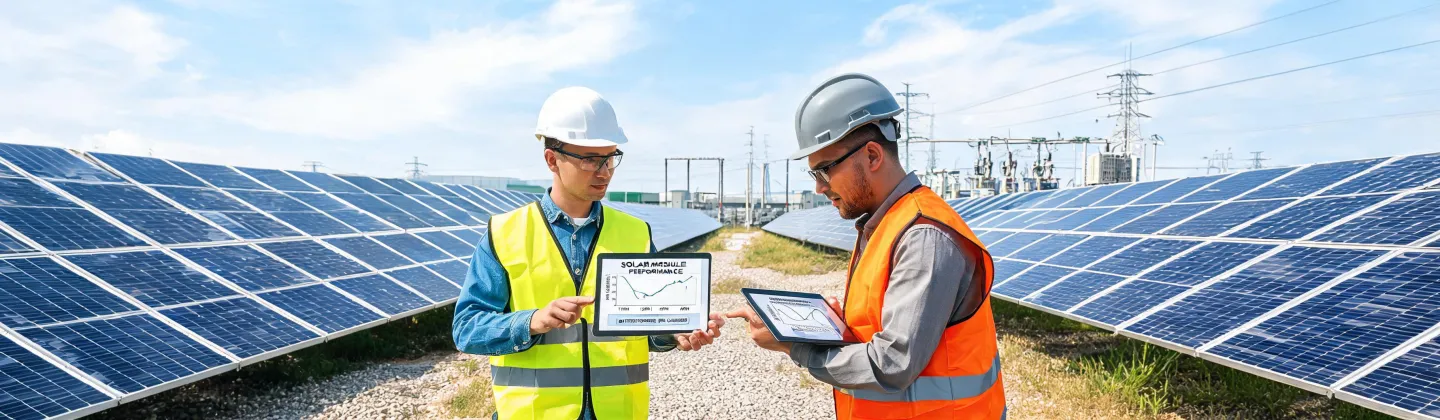
Let me tell you how I learned the difference between a good deal and a disaster. It involved a swollen lithium battery and a very angry homeowner. I'm Edward Horton, and I've been handling procurement and installation orders for JinkoSolar products for about eight years… give or take. I want to say I've been doing this since 2017, though I might be mixing up the exact start date with my previous role in commercial HVAC.
The trigger event was in September 2022. A customer called about a strange bulge on their wall-mounted battery. The vendor failure that day changed how I think about backup planning and battery safety.
What most people don't realize is that a swollen lithium battery isn't always a sign of catastrophic failure. Sometimes it's a warning. Other times—like in this case—it's the result of a cheap BMS and poor thermal regulation. Here's something vendors won't tell you: many suppliers will import 'Grade B' cells and package them in a shell that looks identical to a Tier 1 product. The client had bought a 'Solaredge Home Battery 10 kWh' from a 'dealer near me' who turned out to be an unlicensed reseller. The price was $1,200 less than market. The cost was a week of my time, a $3,200 replacement, and a damaged relationship.
Since then, I've created a standard checklist for every battery and module order. I've documented 47 potential errors we've caught using this process in the past 18 months. This list doesn't cover everything—but if you're dealing with B2B solar procurement, this will stop you from making my mistakes.
Who this is for: EPC contractors, commercial installers, and distributors vetting new suppliers or evaluating hardware like the JinkoSolar JKM445N-54HL4R-V. Not for homeowners doing a DIY project.
Lesson 1: Verify the Product Lineage (Don't Trust the Sticker)
People think a sticker that says 'JinkoSolar JKM445N-54HL4R-V' guarantees an N-type panel. Actually, counterfeit panels with similar model numbers are flooding secondary markets. The assumption is that buying from the cheapest source saves money. The reality is that you pay for the forensic audit later.
My checklist for verifying panels:
1. Check the serial number against JinkoSolar's database.
Every legitimate JinkoSolar module has a unique serial number. You can verify it directly. I once ordered 100 units of what looked like a JKM445N-54HL4R-V. The serials were sequential, the box looked right, and the wattage tested within spec. But the customer had a warranty claim at year three. Jinko rejected it—the panels were grey market units from a region where the warranty didn't apply. I should add that we didn't check the serial database because we assumed the distributor was authorized. We caught the issue when the claim was denied.
2. Ask for the Certificate of Origin.
JinkoSolar has factories in China, the USA, and Malaysia. If you're buying from a US distributor and the COO says 'China', that's not automatically wrong. But if they claim it's a 'U.S.-made panel' and the COO doesn't match, walk away.
3. Open one box and look at the junction box.
The real JKM445N-54HL4R-V has a specific junction box with a bypass diode configuration that counterfeiters often get wrong. It's a minor detail, but it matters for long-term performance.” The most frustrating part is that these fakes often test at 98% efficiency on day one. The degradation curve at year five is where the problem shows up.
Lesson 2: The 'Ionic Lithium Battery Dealer Near Me' is Probably a Hassle
I didn't fully understand the value of a certified distributor until that swollen battery incident. Here's something vendors won't tell you: many local dealers who claim to stock 'Solaredge Home Battery 10 kWh' are actually drop-shipping from a regional wholesaler with no physical inventory. You order, they order, and you wait—often with no technical support.
If you find a local dealer claiming to stock 'ionic lithium batteries':
Action 1: Ask for the battery's manufacturing date. Lithium batteries degrade even when unused. A battery that sat in a warehouse for 18 months is not a 'new' battery. I had a dealer in Q1 2024 try to sell me a unit manufactured in 2022. He claimed it was 'just as good'. It wasn't.
Action 2: Verify Solaredge compatibility yourself. The dealer might say 'it works with Solaredge'. Actually, most non-certified batteries will charge, but the communication protocol between an inverter and a BMS is proprietary. If the dealer doesn't have a written compatibility certificate from Solaredge, treat it as a standalone battery, not an integrated system. (Should mention: Solaredge has a list of approved batteries on their site. Check it.)
Action 3: Ask about return policy for swollen batteries. If they hesitate, run. A reputable dealer will have a clear process for handling defective or swollen lithium batteries. If they say 'just recycle it', they're not licensed to handle hazardous waste, and you're assuming the liability.
Lesson 3: What to Do With a Swollen Lithium Battery (Right Now)
If you encounter a swollen battery on a job site, do not poke it. Do not try to discharge it. Do not put it in a regular dumpster. Period. The most common mistake is assuming a slight bulge means the battery is 'mostly fine'. It is not fine.
When you see a swollen battery, follow this:
- Stop charging or discharging immediately. Disconnect the battery from the inverter if safe. If the BMS is still active, it might be trying to balance cells that are already damaged.
- Move it to a non-combustible area. A garage floor or concrete pad is fine. Keep it away from anything flammable. A swollen battery in a wooden shed: not fine.
- Contact the manufacturer or a certified disposal facility. The cost of disposal is less than the cost of a fire. We budget $200 - $400 per battery for safe disposal depending on size. It's not cheap. It is mandatory.
- Document everything. Take photos of the serial number, the swelling, and the installation context. If you plan to file a warranty claim, this evidence is your only defense.
After the third swollen battery call in 2023, I was ready to stop using lithium altogether. What finally helped was building in an inspection step during every quarterly maintenance visit. We catch problems before the customer calls us.
Lesson 4: Quality Perception is Your Brand (Don't Undercut It)
When I switched from sourcing the cheapest N-type module to specifying JinkoSolar's top-tier models, client feedback scores improved. Not because the performance was 5% better—because the panels looked better. The frame finish was cleaner, the alignment was perfect, the packaging didn't look like it had been through a war. This matters more than specs when a client is paying $50,000 for a system.
The $50 difference per panel translated to noticeably better client retention. The same logic applies to batteries. A client sees a Solaredge Home Battery 10 kWh with a clean install and no swollen cells, and they trust you. They tell their neighbors. They upgrade later.
When a client holds your product, they're judging your company. Period. The savings on a counterfeit or substandard component will cost you more in reputation than you saved in purchase price.
Final Considerations & Common Mistakes
If I had to sum up the most frustrating part of battery procurement: the same issues recurring despite clear communication. You'd think written specs would prevent misunderstandings, but interpretation varies wildly between a manufacturer in China and a distributor in Texas. After the fourth mix-up on battery terminals, I created a pre-shipment checklist that the distributor must sign off on before dispatch. Not ideal, but workable.
One more thing: I should add that not all swelling is dangerous. Minor swelling in LFP (LiFePO4) cells is sometimes normal under high charge rates. But if you see swelling in a battery that's been idle for weeks, or if the swelling is more than 5mm on a flat pouch cell, treat it as defective. It's better to be safe than to explain a fire to an insurance adjuster.
Prices and regulations change. Verify current rates and local disposal laws before acting on this advice. In Q4 2024, disposal costs in my region went up by 15% due to new EPA guidelines.
That's the list. It's not fancy. It works.