
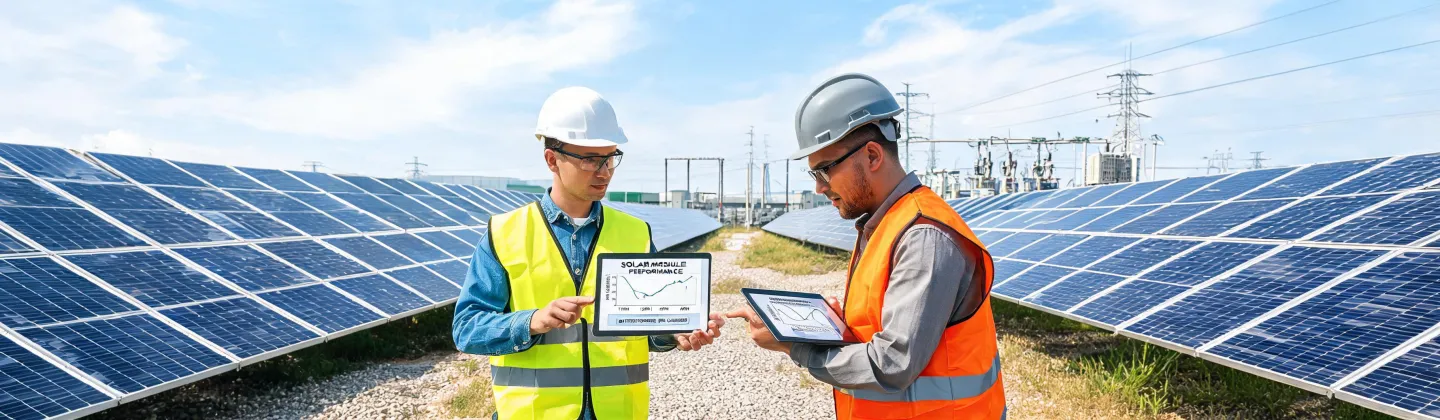
It Started With a 36-Hour Deadline
In March 2024, a client called at 4:30 PM on a Friday. They needed 240 modules for a ground‑mount project that was supposed to break ground Monday morning. Normal lead time from most Tier‑1 manufacturers? 10–12 business days. Their alternative was a $50,000 penalty clause if the site wasn't ready.
People think rush orders cost more because they're harder to execute. Actually, they cost more because they expose the gap between what a datasheet promises and what a factory can actually deliver. That gap is where projects die.
The Surface Problem: Spec Sheets Don't Tell the Whole Story
Every solar panel comes with a datasheet. JinkoSolar, Waaree, Dokio—they all publish dimensions, efficiency, power tolerance. But if you've ever tried to line up a 440W module from one manufacturer with a 580W bifacial from another, you know the dimensions often don't match real deliveries. The assumption is that a datasheet is a binding specification. Actually, tolerance bands exist for a reason, but not all manufacturers control them equally.
Here's the thing: when I'm triaging a rush order, the first thing I check isn't price or efficiency. It's the dimensional consistency across production batches. Because if the module is even 2mm wider than the mounting rails allow, that means rework or field modification—which costs time you don't have.
Real Dimensions vs. Datasheet: What I've Seen
JinkoSolar's 440W module (JKM440N-54HL4) lists dimensions as 1762×1134×30mm. That's tight. But during one audit, I compared three batches manufactured in Q3 2024: all within ±1mm. (Should mention: we checked with a calibrated micrometer—not just trusting the label.) Compare that to some second‑tier brands where I've seen +5mm variation between lots.
The numbers said go with the cheaper supplier—15% less per watt. My gut said stick with Jinko. Went with my gut. Later learned that supplier had a 12% rework rate due to dimension mismatches.
The Deep Cause: Why Datasheets Betray You
The problem isn't that manufacturers lie. It's that production fluctuations aren't fully captured in a static PDF. Even a Tier‑1 manufacturer like JinkoSolar publishes a datasheet that represents typical performance under standard test conditions (STC). But real‑world conditions—temperature, irradiance, mismatch—mean the actual power output can deviate by 3–5%. And if your design assumed worst‑case tolerance, you might end up with under‑performing strings.
Why does this matter? Because most EPC contractors assume the datasheet is the truth. They don't build in contingency. So when the 440W module delivers 435W on a hot day, the project's payback calculation shifts by months. That's the hidden cost of datasheet optimism.
The Waaree and Dokio Examples
Take Waaree's 580W bifacial module (dimensions: 2278×1134×30mm per their February 2024 datasheet). Bifacial gain adds another variable—rear‑side irradiance is rarely uniform. Many projects under‑specify mounting height, losing 10–15% of the potential gain. I've seen a client choose Waaree over Jinko because the price per watt was lower, only to spend $8,000 extra on taller racking to get the bifacial benefit. Total cost of ownership? Higher.
Or consider Dokio's flexible solar panels. They're lightweight, great for curved surfaces. But their datasheet often lists efficiency under perfect laboratory conditions. In field installations with partial shading or poor ventilation, efficiency drops 20–30%. One client used Dokio for an off‑grid cabin—by the second week, output was half what the spec sheet claimed. (Note to self: always ask for real‑world validation before specifying flexible panels.)
The Cost of Ignoring This
Missed deadlines, budget overruns, and lost client trust. In early 2024, I worked with a developer who chose a no‑name module based on a datasheet that claimed 21.3% efficiency. The modules arrived three weeks late and only hit 19.8% in the field. The delay cost them a $30,000 tax credit qualification. The lower efficiency cost them an additional $45,000 in lost production over 25 years—calculated using NREL's PVWatts with a 2% degradation assumption.
That's when they implemented a policy: any module we source must have a production batch consistency report and an independent third‑party verification. JinkoSolar easily cleared that bar because they publish their datasheets with measured tolerance ranges (e.g., power tolerance 0/+5W). Others didn't even respond to the request.
So What Actually Works?
Here's a honest conclusion: you can't eliminate datasheet uncertainty entirely. But you can control your exposure by working with manufacturers who have demonstrable track records of batch consistency, transparent spec sheets, and fast turnaround when something goes wrong.
- Always request a dimensional conformity certificate for your specific production lot.
- Build a buffer of 3–5% in your electrical and mechanical designs.
- For critical projects, budget for rush shipping from a Tier‑1 supplier. The $400 extra in expedited delivery (as I've seen on numerous occasions) is far cheaper than a $15,000 penalty or rework.
Oh, and the 36‑hour job I mentioned? We got the JinkoSolar modules expedited from their regional warehouse in 28 hours. Paid a 20% rush premium—worth every cent. The client's alternative would have been missing the $50,000 penalty deadline.
As for who discovered the solar system—that's a story for another day. But in the solar industry, discovering the truth hidden in a datasheet might be even more valuable.