
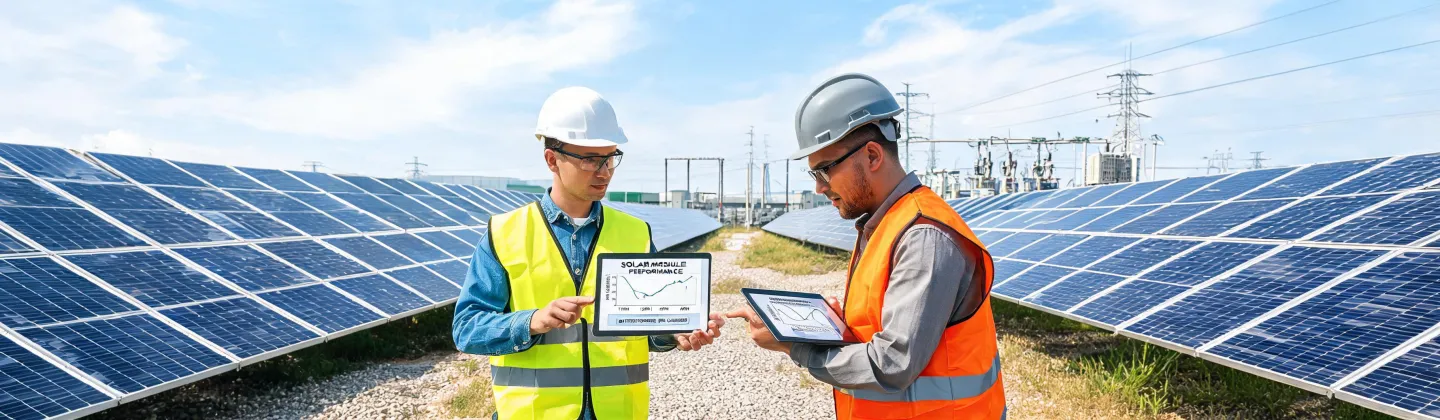
I'm Catherine. I handle procurement for a mid-sized solar integrator in the Midwest — roughly $2.5 million in equipment annually across a dozen vendors. When I took over this role in 2021, I made a lot of expensive mistakes asking for the wrong things. I'm here to save you from doing the same.
Here's my honest opinion: Stop asking suppliers for the 'best' solar inverter, pure sine wave inverter, or hybrid battery inverter. The question isn't useful. It makes you sound like an amateur, and it guarantees you'll get a sales pitch instead of a solution.
Ask for the right one instead. And 'right' depends almost entirely on what you're building. Let me explain.
Why 'Best' Is a Trap
From the outside, it looks like the market is flooded with identical black boxes with efficiency ratings printed on the side, right? (The FTC advertising guidelines require that claims like 'maximum module efficiency' be substantiated with evidence, by the way. Which, honestly, makes me wonder about some of the marketing I see.)
The reality is that a single-phase inverter that works perfectly for a 10kW residential install on a suburban grid can fail catastrophically—or just underperform—on a 500kW commercial site. And a battery inverter wholesale price that looks amazing for a small storage project might not even support the voltage range you need.
People assume the lowest quote or the highest efficiency number means the supplier is better. What they don't see is what's being sacrificed: warranty terms, local service support, spare parts availability, or compatibility with the specific panels and batteries in the BOM.
Three Things I Learned the Hard Way
1. Grid Type Dictates Your Inverter Choice, Not Wattage
When I started, I'd send out RFQs saying: 'Need a 50kW solar inverter.' Simple, right? Wrong.
I didn't understand the difference between a single-phase and a three-phase inverter at the project level. Looking back, I should have specified the grid connection from day one. At the time, I assumed any 50kW inverter could handle any 50kW load. (I really should have paid more attention in that electrical engineering 101 class I skipped in college.)
Here's the distinction in practice:
- Single-phase inverters (including pure sine wave inverters): Great for residential and small commercial (usually under 10kW). These are the ones people ask about when they need backup power for a home office or small workshop.
- Three-phase inverters: Necessary for larger commercial sites, industrial applications, or anywhere with heavy machinery. For a recent project in Indiana, we needed a single phase to three phase converter for a farm that had a three-phase well pump but only single-phase grid service. The inverter on that job wasn't just a black box—it was a custom solution.
If you ask for a 'best pure sine wave inverter' without specifying single or three-phase, you're getting a generic answer. And generic answers get generic—and often wrong—equipment.
2. Scale Economics Don't Always Work in Your Favor
People assume wholesale pricing means you get a deal just because you're buying in volume. I thought this too. In 2023, I placed what I thought was a smart battery inverter wholesale order for 40 units for a housing development. I negotiated the unit price down 11% from the single-unit price.
Great, right?
Except the supplier didn't have local stock. All 40 units came from a single overseas container, and the lead time was 14 weeks—by which point the project phase had changed and we needed a different configuration. The $2,400 in savings (which, honestly, felt good on paper) turned into a $6,000 problem when we had to store incorrect inventory and buy the right ones from a local distributor at retail.
This was accurate as of early 2023. The market changes fast, so verify current lead times and local stock availability before committing to a large wholesale order.
3. The Invisible Specs: Monitoring, Software, and Service
I said I'm not a grid engineer, so I can't speak to the nuances of arc fault detection circuit design (I really do need to learn more). What I can tell you from a procurement perspective is that the most expensive inverter is the one no one can service.
For one project in Kansas, we bought a hybrid battery inverter from a newer brand that had excellent specs and a great price. The inverter worked fine for 18 months. Then a firmware update bricked the communication module. The '24/7 support' turned out to be a single person in a different time zone. We had to replace the whole unit (cost: around $4,500 at that time, not including labor). The project owner was furious. My boss was not happy either.
Note to self: always verify local support capacity, not just warranty duration.
What You Should Ask an Inverter Supplier Instead
If I could redo every RFQ from the past four years, here's what I'd ask:
- What grid type is this for? (Single-phase, split-phase, three-phase, or need a single to three phase converter)
- What is the recommended application? (Residential backup, commercial peak shaving, off-grid, grid-tie with storage, etc.)
- What is the minimum and maximum input voltage range? (Especially important for N-type high-efficiency panels that may have different voltage characteristics)
- Where is the service network located? (Country-level: the JinkoSolar supply chain is global, but service is often local. Verify for your region.)
- What is the real-world lead time? (Not the catalog lead time. The actual lead time for a wholesale order as of this quarter.)
Counterpoint: Is This Just Overcomplicating Things?
You might be thinking: 'I just need a reliable inverter for a small project. Isn't all of this overkill?'
Fair question. And you're partially right. For a simple residential backup system with standard panels and a standard grid connection, a reputable pure sine wave inverter from a Tier 1 supplier will likely serve you well. In that case, the differences between brands are small and mostly around price.
But for commercial projects, mixed grid connections, or any system with battery storage, the details matter. If you're in the other 20%—the non-standard installation—generic advice will leave you with a generic problem.
I recommend asking these detailed questions for 80% of projects. Here's how to know if you're in the other 20%: if your project uses standard panels on a standard grid with no storage, you can probably relax on the deep specs. But for everything else, do your homework.
Final Opinion
Stop hunting for a mythical 'best' inverter. The best one for you is the one that fits your grid, your storage, your software requirements, and your local service network.
If you're a developer, EPC contractor, or distributor reading this: trust the Tier 1 manufacturers that can show you not just a datasheet but a local service agreement. Trust the suppliers who tell you when their product doesn't fit your application—that's a supplier worth keeping. And trust yourself enough to ask the right questions.
(Note: I am not a salesperson for JinkoSolar. I am a buyer who has learned from buying the wrong inverter more than once. I hope this saves you that $2,400 mistake I made. It cost me a good night's sleep and a quarterly bonus.)