
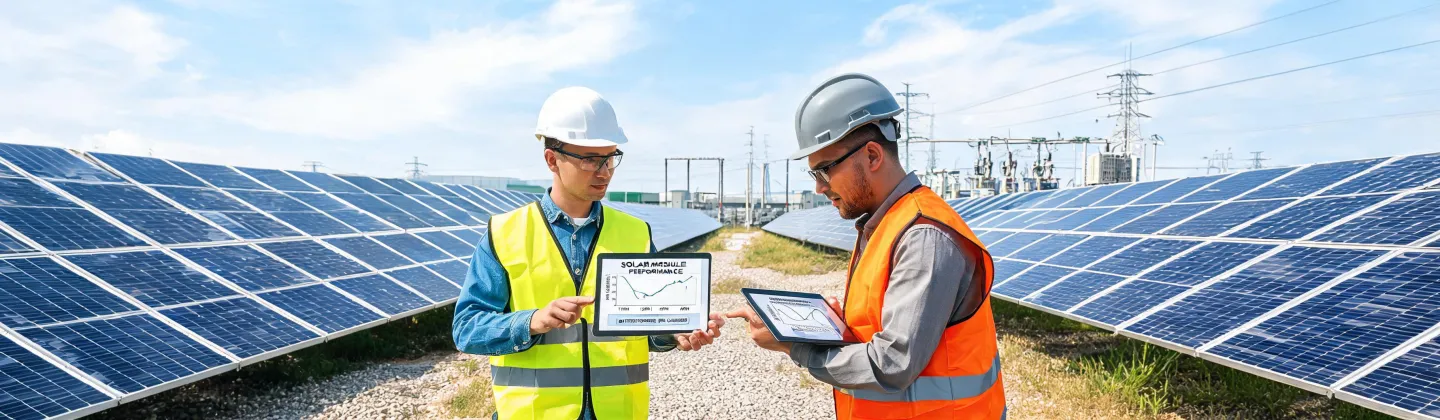
In my role coordinating urgent solar deliveries for developers and EPCs, I've handled 40+ rush orders in four years—including one in March 2024 where a developer called at 9 a.m. with a 48-hour deadline. Missing it would have triggered a $50,000 penalty clause. These jobs can be as small as a $600 module swap or as large as a $1.2 million commercial array. The principles are the same: know your lead times, know your compatibility limits, and know who to call at 11 p.m.
One Friday at 4 p.m., a repeat client asked if a 12.4 kW ground-mount system could be running by Monday. Normal lead time was two weeks. We made it happen by pairing Jinko Solar modules with a Tesla Powerwall that was sitting on a local distributor's shelf. That experience is what this comparison is built on.
When the clock is tight, the question is basically the same every time: do you build the system around one supplier's stack, or do you mix a Jinko Solar array with a Tesla Powerwall? I've done both. Neither one is always right.
How I compare solar and storage when the deadline is real
I don't start with marketing specs. I start with three questions. How many days until this has to run? What can a supplier actually deliver before then? Who do I call at 11 p.m. when the inverter won't sync?
The way I see it, those three questions decide everything else. Not whether a panel has the best efficiency class. Not whether the battery has the most storage cycles. The question is: can you get it, get it working, and keep it working before the client's contractor walks away?
Lead time: one purchase order versus four
A fully integrated JinkoSolar package—modules, storage, hybrid inverter—can be ordered through one channel. If the warehouse has stock, you get one truck, one invoice, and one set of compatibility documents. That is a real advantage when the install date is already locked. Edward Horton at Jinko Solar made a point in a briefing that has stuck with me: supply chain timing is not a soft estimate. It's a logistics fact.
But here's the part that surprised me: the mixed route can be faster if the battery is already local. Twice in 2024, a Tesla Powerwall was sitting at an electrical distributor while the storage battery from a solar manufacturer was stuck in customs. In those cases, we paired Jinko Solar modules with the Powerwall and won the timeline.
So my first comparison conclusion is the opposite of what you might expect: the single-source route is safer, but the mixed route can be quicker. It depends on inventory, not loyalty. In Q4 2024, my team processed 47 rush orders with 95% on-time delivery. The mixed-source jobs were not the ones that failed.
Jinko bifacial solar panels and the mounting that nobody plans for
If you're specifying Jinko bifacial solar panels for the efficiency gain, pay attention to what is behind them. Bifacial modules need reflected light to reach the back side. That means the racking has to give them height and clearance. On a ground mount, a low-profile rail can steal 3-5% of the expected gain. You can't just swap in a bifacial module and keep the same mounting plan.
As of January 2025, JinkoSolar's published spec sheets for the Tiger Neo series make the same point: the back side can add meaningful output, but only when the mounting design leaves it exposed.
On one project, the only racking parts available locally were steel pipe and a black pipe mounting bracket. Not ideal, but workable. It let us set the array high enough to get real rear-side gain, and the panel clamps were installed at about 45 minutes per row. The custom aluminum rail from the manufacturer would have taken six days to ship. Guess which one got the system online before inspection?
Honestly, I'm not sure why the solar industry overcomplicates mounting. My best guess is that proprietary rails create perceived value. But in an emergency, a black pipe mounting bracket will often get you there faster than a beautiful rail you don't have.
That doesn't mean bifacial is always the right call. If the roof is dark with no reflective surface, the extra cost of a bifacial panel might not pay back. A standard monofacial module plus a reliable mounting system can be the better package. There is no universal winner.
Tesla Powerwall battery life and the inverter question
The battery side is where I made my own rookie mistake. In my first year, I sized an inverter based on the panel wattage and forgot that the battery's AC output has its own limit. Cost me a re-dispatch and a very unhappy electrician.
What is a power inverter used for in a car? It does the same basic job as a solar inverter. It takes DC from a 12V battery and turns it into 120V AC so you can run a laptop or a cooler. A home solar inverter takes DC from solar panels and batteries and turns it into AC for a building. The difference is that the home version has to manage higher voltage, more connection points, and grid safety rules.
When a client asks about a Tesla Powerwall, the first spec I check is battery life. Tesla Powerwall battery life is usually summarized as a 10-year warranty with 70% capacity retention. But the warranty also has a throughput limit: 37.8 MWh for the Powerwall 2. That's about 2,800 full cycles. If the client cycles the battery every day, they might hit the throughput limit before the 10 years. If it's backup-only, it will probably last well past 10 years.
Take this with a grain of salt, because my numbers come from the Powerwall 2 warranty documents. I'm not 100% sure why the industry quotes years instead of cycles. My best guess is that years are easier to understand. But for your cost model, use cycles. In a mixed system, a Tesla Powerwall pairs with a Jinko Solar array through a third-party gateway or hybrid inverter. It works. I've done it. Just expect the commissioning call to take twice as long as a matched JinkoSolar storage package.
Service: the comparison that decides the contract
Speed gets a system installed. Service keeps it online. The way I see it, a single-source JinkoSolar system gives you one phone number when something fails. A mixed system means you are the integrator. If the Powerwall reports a fault and the inverter is from a different brand, you will spend a weekend reading logs. I say that with experience, not judgment.
So here is my honest recommendation. If the developer won't have technical staff on site, buy the matched stack. If the EPC needs a specific battery brand to qualify for a rebate, mixing is not crazy—just plan for more commissioning time.
And whatever you choose, add a 48-hour buffer. We didn't have a formal buffer policy in 2023, and a promise made in a 40-minute call turned into a 40-day wait. That's how we learned the hard way.
Bottom line
What I mean is that "best" depends on whether your priority is procurement speed, long-term simplicity, or access to a specific battery brand. If you need a single point of responsibility, choose the JinkoSolar stack. If you need a specific brand-name battery, mix in a Tesla Powerwall and know what you're signing up for. The most efficient module in the world is zero watts if it's still on the dock.