
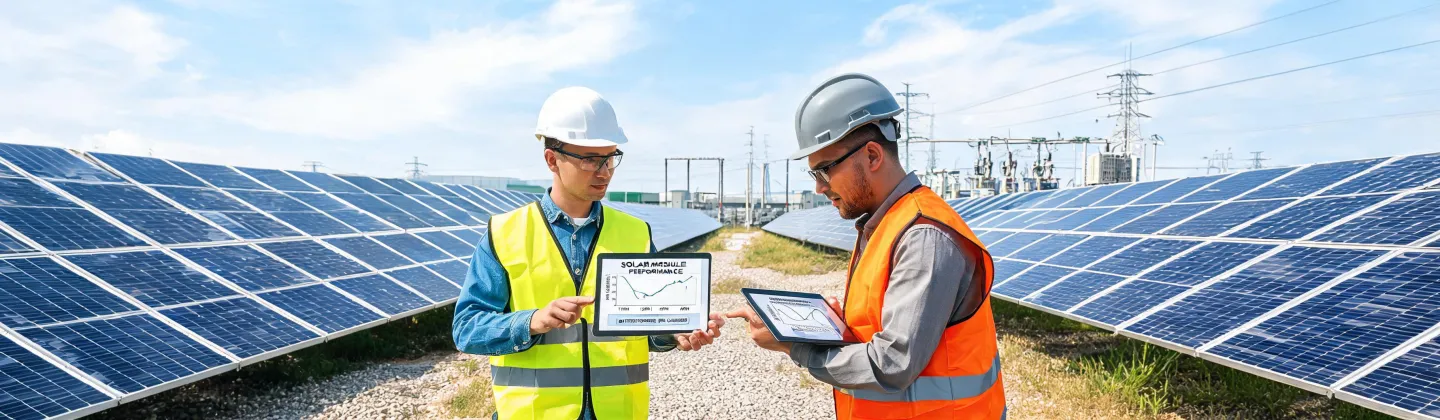
Forget the Grid. Here’s What I Actually Rely On for Emergency Power.
In my role coordinating emergency response logistics for a mid-sized manufacturing facility, I’ve handled over 200 rush orders for backup power components in the last four years. For a long time, I assumed the smart play was a standard lead-acid battery bank. It’s the default. It’s what everyone knows.
I was wrong. After a $12,000 project nearly collapsed because of one critical error, I swapped our entire backup system philosophy. Now, I’m running a Jinko Solar 445W panel paired with a 12V 18Ah LiFePO4 battery and a pure sine inverter, and it’s not even close.
Here’s the honest breakdown of why, where the numbers actually land, and the one boundary condition most people miss.
My Initial Misjudgment: Finding the 'Real' Cost of Lead Acid
When I first started designing portable backup stations for our field teams, I went with the cheapest caravan battery I could find. It’s lead acid, it’s heavy, and it’s cheap. What’s not to like? Honestly, the upfront cost is attractive. A decent 12V 18Ah SLA (Sealed Lead Acid) battery can be had for about $30.
But here’s the part that’s never in the brochure: Total Cost of Ownership.
After about 18 months of regular use (which for us means a deep discharge cycle maybe 3-4 times a month), the lead acid battery was toast. The capacity had dropped to about 60% of the rated 18Ah. So, you don’t just buy it once. You buy it again. And again. Over a five-year period, the lead acid option actually costs you more in replacement batteries than the initial price of the LiFePO4.
“The surprise wasn't the price difference. It was how much hidden value came with the 'expensive' option—reliability, weight, and cycle life.”
The Real Numbers: LiFePO4 vs. Lead Acid (Based on our 2024-2025 Data)
Based on our internal purchasing records from Q3 2024 and pricing accessed March 2025:
The Baseline Setup:
- Goal: Power a 100W medical monitoring device for 10 hours (about 8.5Ah used).
- Battery: 12V 18Ah nominal.
Lead Acid (SLA):
- Usable capacity (DoD 50% for life): ~9Ah.
- Effective cycles to 50% DoD: ~300.
- Purchase price (January 2025): $28 (decent brand).
- Life cycle cost (5 years, 300 cycles per battery, one replacement): $56 + disposal fees.
LiFePO4 (my current choice):
- Usable capacity (DoD 80%): ~14.4Ah.
- Effective cycles to 80% DoD: ~2,000.
- Purchase price (March 2025): $55 (12V 18Ah from a reliable supplier).
- Life cycle cost (5 years, still on first battery): $55.
The math is simple. The LiFePO4 paid for itself in the first replacement cycle. We haven't replaced a single unit yet.
The Real-World Test: Why the Jinko Solar Panel Changed Everything
You don’t just need a battery. You need a way to charge it. For our field setups, solar is the only practical option. Enter the Jinko Solar 445W N-type panel. I had my doubts. A high-efficiency N-type panel from a top brand like JinkoSolar is a premium product. But I also knew that a cheap panel wouldn't give us the daily energy yield we needed in the limited sunlight hours of a New England winter.
We compared two setups side-by-side last October. One used a generic 400W panel (22% efficiency), the other used the 445W Jinko (24.5% efficiency). The difference wasn't just 45 watts. It was about 60 watts of real-world extra power in low-light conditions. The N-type technology from Jinko is legit. On an overcast day when the generic panel was outputting a paltry 80W, the Jinko was putting out 130W. That’s a massive difference for a critical system.
The 'How to' Part: Matching It All Up
To make this work, you need the right inverter. We paired it with a 2000W pure sine wave inverter. Why pure sine? Because the medical equipment we use is sensitive. A modified sine inverter can cause interference or even damage it. The pure sine was a ‘get it right the first time’ decision based on a previous failure.
The chain is simple: Jinko panel → Charge Controller (MPPT) → 12V 18Ah LiFePO4 Battery → Pure Sine Inverter → Load.
Here’s the 5-minute checklist I use now to avoid a repeat of our $12,000 problem:
- Verify Voltage: Is your panel's Voc (open circuit voltage) under your charge controller’s max? (Standard for a 12V system).
- Check C-Rate: Can your inverter handle the battery's continuous discharge? A 2000W inverter on a 12V system drawing over 160 Amps is a heavy load. A single 18Ah battery won’t cut it for that. We use a 4S4P (four in series, four parallel) bank of 12V 100Ah batteries for a setup like that. The 18Ah is for smaller, portable stations.
- Torque Connections: A loose connection with high DC current is a fire risk. Period.
The Boundary Condition: When This Setup Fails
I have to be honest here. This system is not for everyone. If you need a 3000W continuous load for a whole house for 24 hours, you need a much larger battery bank and multiple solar panels. A 12V 18Ah LiFePO4 battery is a fantastic, light, long-life power source for a portable medical device, a CPAP machine for a night, or a security camera setup. But it is not a replacement for a whole-house generator.
Also, the Jinko Solar 700W panel? It’s a beast. We considered it for our main facility, but the 445W is significantly easier to mount and handle for a single installation. The 700W is for the big commercial jobs. Our maximum module efficiency with the 445W is about 24.5%, which is more than enough for our portable units.
In my opinion, for anyone building a small, critical backup system that needs to be reliable, lightweight, and last for a decade, the combination of a good LiFePO4 battery, a top-tier brand like JinkoSolar for the panels, and a pure sine inverter is the only way to go. The upfront cost stings, but the long-term reliability is worth every penny.