
Bottom line: what I'd decide right now
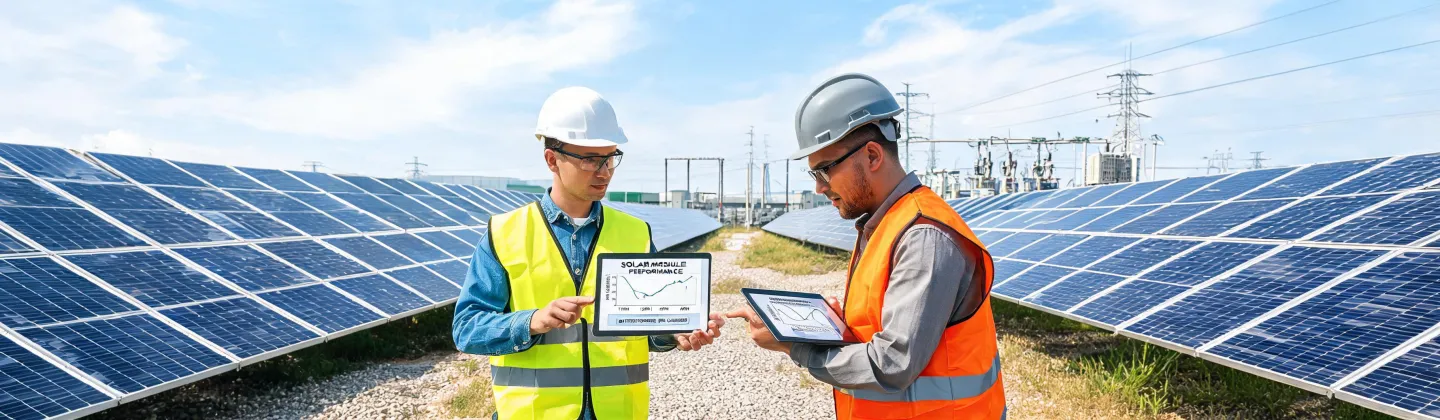
If a client asked me today about Jinko Solar Tiger Neo 3.0 590W panels, my answer would be: yes, they're worth looking at—if the project can handle a large-format module and you've verified the mechanical specs. The 590W panel doesn't change the fundamentals. 25 years is a warranty, not a death date, and a metal roof is usually a great host for solar if the mounting system is rated for wind.
In my role coordinating solar equipment deliveries, I don't start with the pretty efficiency curve. I start with time, feasibility, and risk. The prettiest panel still has to arrive, fit, and work with the inverter and racking.
Jinko 590W solar panel price, as of early 2025, is usually in the $140–$200 range per panel at distributor pallet volume, before freight. Verify current pricing because prices are moving.
And if you're also comparing batteries: a 12V 200Ah LiFePO4 battery weighs about 24kg, while a lead-acid battery of the same voltage and capacity weighs about 55–65kg. That weight difference is one of the biggest arguments for lithium in a solar storage system, but it's not the only one. I'll get to that.
Why I'm giving you this answer
Most of my work is 'we need it now.' I've handled 300+ rush orders in eight years as a solar equipment coordinator. In March 2024, I worked on a commercial job where the developer needed 590W modules on site in six days and normal lead time was two weeks. We made it, because we checked stock first and price second.
But I only learned to check mechanical dimensions after ignoring someone's warning. In Q3 2023, we rushed an order for modules that had the right wattage and the wrong connector. We paid $800 in adapters and lost a day of labor. That's the kind of error that doesn't show up in a quote.
From the outside, a larger panel looks like a simple upgrade. The reality is high-wattage modules can have different voltage, current, and physical dimensions. If you don't verify those against the racking and inverter, the panel's efficiency doesn't matter.
Jinko Solar Tiger Neo 3.0: what I'd check before buying
Tiger Neo 3.0 uses N-type TOPCon cells. Compared to older P-type PERC modules, TOPCon typically has a better temperature coefficient and lower degradation. In my view, that's a genuine improvement, not just marketing.
Still, I ask four questions before I approve a purchase:
- What is the exact max power and efficiency? The 590W model should have an efficiency around 22.5–23% depending on the variant. Check the current JinkoSolar datasheet.
- What are the dimensions and weight? A module in this class weighs roughly 30kg. The exact number matters for handling and for clip spacing on a metal roof.
- What are the electrical specs? The voltage and current affect string sizing. A higher-current module can overload a string inverter that was sized for older panels.
- What exactly does the warranty cover? Look for the linear power output curve. '25-year performance' without a degradation rate doesn't tell you much.
If a distributor can't answer those questions, I treat it as a red flag.
Jinko 590W solar panel price: what I'd budget
I won't give you one firm price, because solar pricing has been moving a lot. Based on distributor quotes I've seen as of January 2025, a Jinko 590W solar panel price lands around $0.24–$0.34 per watt at pallet volume in the US. That's roughly $140–$200 per panel. Smaller orders are usually at the high end, and freight is extra.
The important reminder: price per panel is only part of the system cost. A 590W panel can reduce mounting cost because you need fewer modules for the same DC size. But if the mounting system needs to be changed to fit the larger footprint, that advantage shrinks quickly.
Solar panel lifespan years: what 25 years actually means
The quick answer to 'solar panel lifespan years' is: 30+ years for the physical panel, with a slowly declining output. The 25-year figure is usually the performance warranty, not the moment the panel stops working.
According to NREL's PV degradation research (nrel.gov), silicon modules degrade at roughly 0.5% per year in real-world conditions. Some newer N-type modules do better. That means after 25 years, a good 590W panel should still be generating around 85–87% of its original nameplate.
What fails sooner is often the inverter. Budget for at least one inverter replacement in a residential or small commercial system's life. The panels are rarely the part that breaks first.
Solar panel on metal roof: why it works, and what I'd check
Metal roofs are one of the better solar surfaces. With standing seam metal, you can mount modules with clamps instead of drilling holes. That reduces leak risk. But a solar panel on a metal roof is only as good as the mounting plan.
- Standing seam vs exposed fastener: clamps are much easier on standing seam. Exposed fastener roofs need more careful flashing and fastener inspection.
- Wind uplift: larger panels catch more wind. The mounting system has to be rated for your local wind speed, usually designed per ASCE 7.
- Roof condition: if the metal is rusting around fasteners, don't cover it with solar. Fix the roof first.
A 30kg panel clamped to a standing seam roof is usually fine. But 'usually' is not an engineering rating. If the installer won't provide a stamped layout for the system, I'd slow down.
Weight of 200Ah LiFePO4 battery vs lead acid: a bigger difference than most people think
If you're looking at battery storage, this is one of the easiest comparisons to make. From the spec sheets I've reviewed, a 12V 200Ah LiFePO4 battery typically weighs around 24kg. A lead-acid battery of the same voltage and capacity weighs around 55–65kg. That's more than double.
The gap gets bigger when you factor in usable capacity. Lead-acid batteries should only be discharged to 50% if you want a reasonable cycle life. A 200Ah lead-acid battery therefore gives you about 1.2kWh of practical storage. A 200Ah LiFePO4 battery can usually go to 80–90% depth of discharge, giving around 2.2kWh. In many off-grid setups, one lithium battery replaces two lead-acid batteries. Now you're comparing 24kg against 120kg.
That doesn't make lead-acid useless. For occasional backup on a tight budget, it still works. For daily solar cycling, the weight savings and lifetime usually make LiFePO4 the better call.
When I'd say no
Not every project needs a 590W module. I'd push back if the roof has a lot of small irregular sections, if the existing inverter can't handle the current, or if the racking was designed for smaller modules and the stamped wind load doesn't cover the larger footprint.
I'd also push back on any quote that looks too good. Gray-market or counterfeit modules exist. Ask for the supplier's authorization and the datasheet. That's not paranoia; it's the same risk check I do on every rush order.
Solar equipment is improving faster than many of us expected. Five years ago, a 590W module was rare. Now it's becoming a normal option. The fundamentals haven't changed though: a good solar array is designed, not just purchased. If you're in a hurry, verify the mechanical specs before you authorize rush freight.