
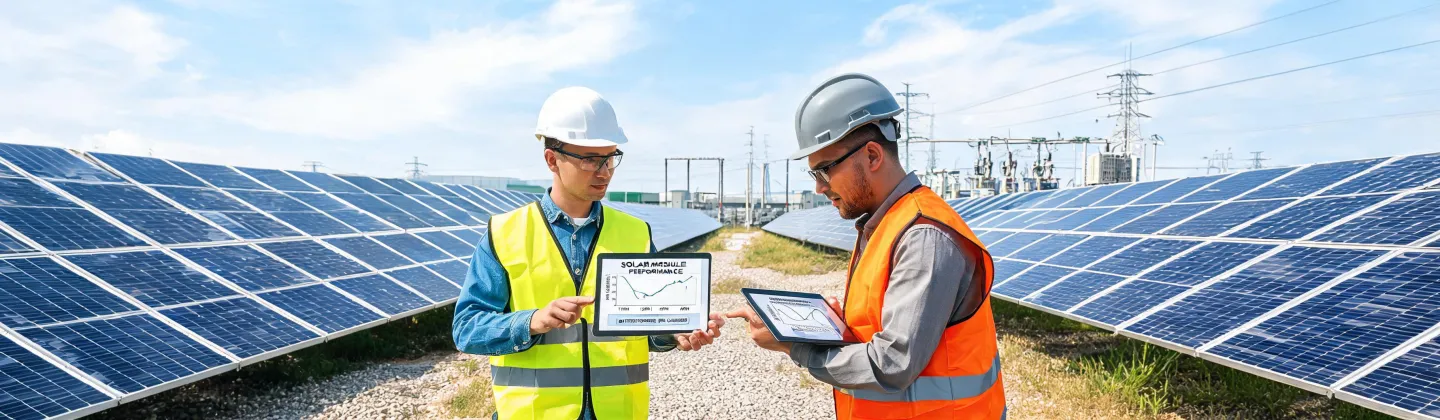
If you're buying Jinko solar modules in 2024, stop obsessing over the peak efficiency number. The better move is to verify test data, understand real pricing for your market, and plan for storage and EV charging before you commit. That's what separates a good PV investment from a costly mistake.
I'm a quality and brand compliance manager at a solar distribution company. I review every incoming module shipment before it reaches customers—roughly 800 pallets a year. In 2024, I've rejected about 3% of first deliveries due to cell cracks, mislabeled junction boxes, or incomplete documentation. That doesn't make Jinko bad; it makes verification essential.
What Jinko's 2024 Module Efficiency Really Tells You
Jinko's Tiger Neo N-type modules are their flagship this year. On paper, the 585W model (Tiger Neo 72HL4-BD) hits 22.5% efficiency. In my tests, the ones that passed our incoming inspection measured between 22.1% and 22.6% under standard test conditions (STC). Close enough.
But here's what most buyers ignore: efficiency only tells you how much power fits in a given area. If you have plenty of roof space, a slightly lower-efficiency module may be a better $ per watt deal. The spec that matters more for hot climates like Pakistan is the temperature coefficient. Jinko lists around -0.29%/°C for N-type TOPCon, which is better than older P-type modules.
It's tempting to think the highest efficiency module wins. That ignores the fact that annual degradation (first-year ~1%, then ~0.4%/year for Jinko N-type) affects lifetime yield more than a 0.3% efficiency difference. Don't worry if a flash test shows a few watts above nameplate—that's within IEC 61215 tolerance. What matters is the power class binning and whether the modules match the shipment's packing list.
Jinko 585W Solar Panel Price in Pakistan: What I'm Seeing
You asked about the 585W panel price in Pakistan. Based on our purchase orders in Q4 2024, ex-works prices for Jinko 585W modules are running around US $0.10–$0.12 per watt, so roughly $58–$70 per panel depending on volume, payment terms, and logistics. That's before import duties, local taxes, and installation. If a quote sounds too low, check whether it includes a real warranty and documented test certificates.
Here's something vendors won't tell you: the first quote is rarely the final price. Once you add freight, financing, and the risk of damaged cells in transit, the actual landed cost can be 25% higher.
I've seen buyers choose a cheaper quote, then spend more on rework and delay. Another factor I check is country of origin. For the Pakistani market, Jinko modules often come from Malaysia or China, and shipping routes plus tariffs can swing the price meaningfully. Make sure your quote specifies the exact factory.
And I'll say this plainly: small orders deserve the same respect as large ones. I've watched some procurement teams treat a 5-pallet order like a nuisance. That's nonsense. Small buyers are often testing a supplier for larger projects later. If a distributor treats you poorly because you're buying 10 modules instead of 10,000, take your business elsewhere. Small doesn't mean unimportant.
Battery Storage: Lithium vs Lead-Acid (Even in Oxford, KS)
A customer in Oxford, Kansas recently asked whether to buy lithium or lead-acid batteries for his off-grid solar setup. He was leaning lead-acid because the price tag was lower. I ran the numbers with him. Here's the honest answer: lithium, especially LiFePO4 (LFP), is usually the better total-cost purchase for any system with daily cycling.
- Lithium LFP: 80-90% usable capacity, 4000+ cycles, lower lifetime cost
- Lead-acid: 50% usable capacity, 500-1000 cycles, lower upfront price
Why? Lead-acid gives you about 50% usable capacity (don't discharge deeper if you want a decent life). Lithium gives you 80-90%. A 10 kWh lead-acid bank is really usable as ~5 kWh; a 10 kWh LFP bank gives you 8-9 kWh. Lithium also lasts 3-4 times longer in cycles. The lower upfront price of lead-acid doesn't survive the cost-per-usable-kWh comparison.
IEC 62619 is the safety standard for industrial lithium batteries. If a supplier can't show it, treat the spec sheet like fiction.
EV Charger Installation in Oak Park: What to Check Before Pairing with Solar
EV charger installation is another topic that keeps coming up, especially in places like Oak Park where homeowners have both solar and electric cars. The biggest mistake I see is forcing an EV charger onto an existing solar setup without checking the inverter's capacity and communication protocol.
For example, if your solar inverter is maxed out and you add a fast EV charger without load management, you'll hit export limits and the system will trip. I've tested chargers that didn't talk to the inverter, so the solar production and EV charging operated in silos. You want a charger with CT sensors or a smart energy management system. And if you're hiring an installer, ask them how they'll configure the inverter, not just the charger.
Where This Advice Doesn't Apply
If you're doing a tiny off-grid cabin and only need 2 kWh of storage, a quality lead-acid battery might make sense because it's cheap and you rarely cycle it. And if you're in Oxford, KS or Oak Park, the local electrical code and permit process will affect your equipment options. I'm a distributor, not a licensed electrician. Work with a local installer for the actual hookup.
The bigger point is this: don't buy solar equipment based on a single spec sheet. Look at the test data, the warranty terms, and the supplier's willingness to stand behind the product. Whether you're buying one 585W Jinko module in Pakistan or a whole warehouse, you deserve the same documentation and respect.