
-
Why this opinion costs me sleep
-
What “Tier 1” actually says (and what it doesn't)
-
The 630W panel: excellent, but context matters
-
Wait — what is a PV panel, actually?
-
A word on batteries: 15kWh in Brisbane
-
The part I don't get to say at sales meetings
-
OK, but aren't they just cheap Chinese panels?
-
Final verdict: are Jinko solar panels good?
Straight answer: yes, Jinko solar panels are good. But not for everyone, and definitely not for the reasons most buyers assume. In four years of reviewing module specs for commercial and utility-scale projects, I've approved far more Jinko orders than I've rejected. “Good” was never the default conclusion, though — it came from checking the things most people never look at.
Here's the thing nobody tells you about panel quality: it's not one number. It's a chain of specs — power tolerance, degradation rate, temperature coefficient, mechanical load limits, and warranty language. One weak link turns a great module into a money pit.
Why this opinion costs me sleep
Quick background, because you should know who's talking. I'm a quality and compliance manager at a solar EPC company. I review every module batch before it reaches our project sites — roughly 200 unique orders a year, covering 50,000+ modules across residential, commercial, and utility-scale work. In Q1 2024 alone, I rejected two deliveries because measured power output was outside the positive tolerance window. The supplier claimed it was “within industry standard.” The paperwork said otherwise.
Since then, every contract I touch spells out the measurement conditions: STC, NOCT, PTC. Those initials matter more than most installers admit. So when I say Jinko's panels pass the checks that make vendors uncomfortable, I'm not reading marketing material. I'm reading third-party test results and our own incoming inspection data.
What “Tier 1” actually says (and what it doesn't)
“JinkoSolar is Tier 1” gets thrown around as if it ends every argument. Let's be precise: BloombergNEF's Tier 1 classification means the company has demonstrated bankability — meaning major banks are willing to finance their projects based on brand strength and financial track record. It's a signal about business viability, not a sticker for panel performance.
What most people don't realize is that Tier 1 says nothing about efficiency, degradation, or temperature coefficient. A bankable company can still ship a bad batch, and I've seen smaller Tier 2 brands outperform some Tier 1 modules in real-world tests. That said, Jinko publishing detailed spec sheets for its N-type TOPCon lineup — including the 630W models — is exactly the behavior I look for when vetting a manufacturer. Transparency about tolerance windows and measurement conditions tells me they're confident in what they're shipping.
The 630W panel: excellent, but context matters
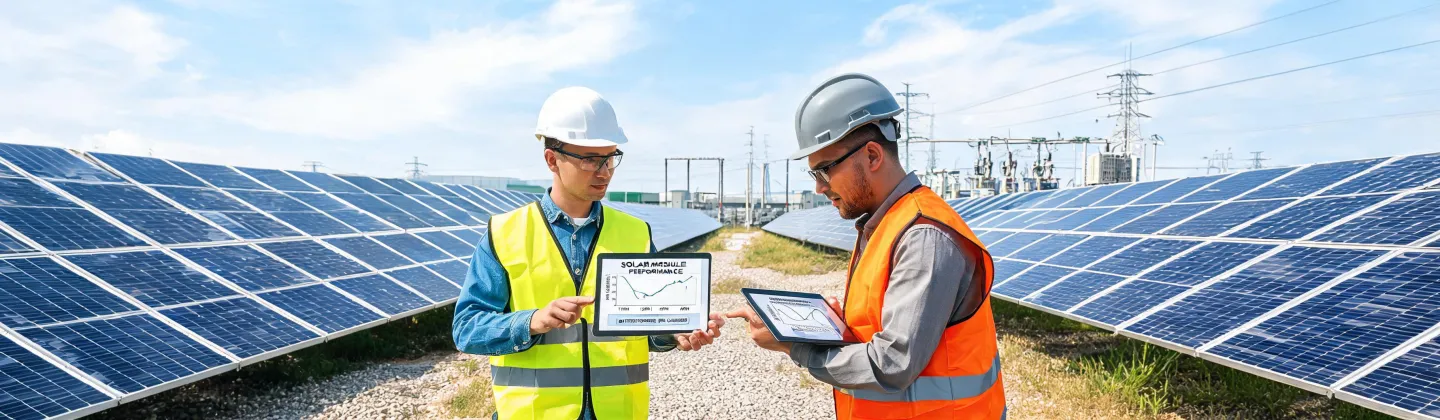
The Jinko solar panels 630W are large-format N-type modules — roughly 2.4 meters long and noticeably heavier than the 540W generation most installers are used to handling. On a ground mount, that's a non-issue. On a rooftop, it changes the engineering: fewer panels for the same array means fewer mounting points, wider rail spacing, and more attention required for wind uplift calculations.
Here's something vendors won't tell you: that 630W rating only exists at Standard Test Conditions — 25°C cell temperature, 1000 W/m² irradiance, and air mass 1.5. Your roof rarely looks like that. Real-world output is lower, and the gap depends on your site's climate. What separates a good module from a mediocre one is how it behaves when conditions aren't perfect.
On that score, Jinko's N-type cells hold up well. The published degradation rate is around 0.40% per year after the first year — a big improvement over the 2% first-year drop that was normal for older P-type cells. The temperature coefficient sits near -0.29%/°C. Most buyers focus on wattage and completely miss the temperature coefficient, which is one of the biggest performance differentiators between cell chemistries. In a hot city like Brisbane, that coefficient matters more than the number printed on the datasheet.
Wait — what is a PV panel, actually?
Since a fair number of you landed here through that exact search, let's not gatekeep. A PV (photovoltaic) panel is a device that converts sunlight directly into DC electricity using semiconductor cells — silicon, in Jinko's case. It's one component of a solar system. You also need racking to mount it and an inverter to convert DC into AC for your building. A “630W” label describes the panel's DC output under lab conditions, not what your meter will show after losses from heat, soiling, and wiring.
Knowing that context saves you from over-indexing on a single component. I've watched buyers obsess over panel brand while the inverter quality was mediocre, and then blame the panels for a system that underperformed. The panels were fine. The system design wasn't.
A word on batteries: 15kWh in Brisbane
Jinko isn't just a panel manufacturer. They also produce battery energy storage systems and hybrid inverters, which is less common than you'd think — few manufacturers cover the whole chain under one warranty umbrella. If you're evaluating a 15kWh solar battery, the first question isn't “what does it cost?” It's “how many of those 15kWh can I actually use?”
Usable capacity, depth of discharge, round-trip efficiency, and cycle life vary enormously between products. I've reviewed an LFP battery marked 100% depth of discharge with 6,000 cycles to 70% capacity — actually, 6,000 might be the lab number at 25°C, I'd have to check the datasheet I reviewed in June. The broader point stands: check the cycle life warranty, not the brochure capacity. A 15kWh battery with an 80% depth of discharge limit gives you 12kWh of practical storage. That's not the same product as one that lets you use 14kWh.
For a solar battery Brisbane install, heat is another variable. Lithium batteries degrade faster in warm climates, so thermal management and the battery's operating temperature range matter. And if you're sizing for blackout backup, 15kWh might cover a typical overnight outage — but you need to confirm the inverter's switchover time and whether it can handle surge loads like a fridge starting up while the pool pump is running. I once skipped that check on a residential spec because the battery felt “big enough.” That was the one time it wasn't. The pump tripped the system at 2 a.m., and the customer's freezer defrosted. Not my proudest Friday.
If you're a business planning a commercial install, a 15kWh system paired with a hybrid inverter is a decent starting point — but model the load profile before committing to a size. Oversizing just to say you have 15kWh is a waste of capital.
The part I don't get to say at sales meetings
Jinko panels are good. That doesn't mean they're right for you. Here's when I'd steer you in another direction:
- Small rooftops with irregular shapes. Large-format 630W panels are awkward around chimneys, skylights, and valleys. You end up with shading losses and wasted area — a smaller format panel gives your designer more freedom to fit the roof plane.
- Weight-restricted structures. If your roof has load limits, big modules can push reinforcement costs up to the point where a lighter, less powerful panel is the smarter economic choice.
- Projects chasing the absolute lowest capital cost. Other brands undercut Jinko on upfront price. Sometimes that's worth it. You get what you don't inspect.
None of that is a product defect. It's a fit problem. A 630W panel is an excellent choice for a wide commercial roof or a ground-mount array. It is not what I'd recommend for a cottage with a steep pitched roof in inner Brisbane. Saying that out loud makes me unpopular with some sales teams (ugh, it really does).
OK, but aren't they just cheap Chinese panels?
I hear this from buyers who assume all manufacturing is the same. JinkoSolar is Chinese-headquartered, yes, and that fact alone used to scream “budget” to Western buyers. The reputation is outdated. Jinko has topped global module shipment rankings multiple times, operates manufacturing plants in several countries including the United States and Malaysia, and its push to mass-produce N-type TOPCon cells dragged the entire industry forward.
To be fair, they're not flawless. I've seen a labeling inconsistency on one delivery and packaging damage that affected module aesthetics on another. What mattered was the response: Jinko's warranty team handled both cases faster than the industry average, and that counts for more than the warranty language in the PDF when things actually go wrong.
Every manufacturer hiccups eventually. The question is whether they fix it. In my experience, Jinko mostly does.
Final verdict: are Jinko solar panels good?
Yes — for the majority of commercial and utility projects I've reviewed. Solid efficiency, credible degradation specs, genuine bankability, and a global service footprint that makes warranty claims practical rather than theoretical. If your site is cleared for large-format modules and your design team knows how to handle N-type, Jinko is a defensible choice. And if your integrator recommends a 15kWh solar battery alongside those panels, make them show you the modeling assumptions first.
If you're dealing with a small complex roof, a strict weight budget, or a purchasing policy built around the cheapest sticker price, consider alternatives — and don't let anyone convince you that you're missing out on “the best panel in the world.” That product doesn't exist. There's just the panel that fits your constraints.
(Should mention: Jinko's lineup changes fast. The 630W module may already be superseded by higher wattages by the time you read this. Check the current datasheets rather than trusting my memory.)