
Go Big or Go Home? The 630W Module Isn't Just for Megaprojects
I'm an office administrator for a mid-sized commercial real estate firm in Arizona. I manage all our solar procurement—roughly $1.2 million annually across 5 vendors. When I took over purchasing in 2020, I thought the conventional wisdom was to always optimize for the lowest $/watt. Turns out, that's a shortcut to headaches. Our last big installation taught me that lesson the hard way.
If you're looking at a commercial PV system with battery storage, skip the specs for a second. Here's the short version: JinkoSolar tier 1 panels, especially the 630W module, are the most cost-effective choice I've found for medium-to-large projects in Arizona. They cut our installation time by 15% and improved our battery integration efficiency by roughly 8% compared to our previous setup. But I'm getting ahead of myself.
Let me explain why I'm so convinced.
Why I Trust the 'Tier 1' Label (and How It Saved Me From a Bad Deal)
First, a confession. Everything I'd read about the PV market said 'Tier 1' was just a BloombergNEF metric—about bankability, not performance. In practice, I found that the Tier 1 badge is a powerful filter against unreliable manufacturers. In 2022, I nearly signed a contract with a non-Tier 1 supplier that was 12% cheaper. The contract was a nightmare of hidden charges and unverified performance data. I walked.
Why JinkoSolar? They're a perennial Tier 1. For us, that means:
- Bankability: JinkoSolar is listed on the NYSE. When I need letters of credit for a $500k project, the bank doesn't blink.
- Warranty Trust: They offer a 25-year power output warranty. I know that's standard, but JinkoSolar has the balance sheet to actually honor it, which isn't true for every brand out there.
- Supply Chain Stability: In 2023, when polysilicon prices went nuts, my JinkoSolar shipments only got delayed by 2 weeks. A competitor using a different panel brand got pushed back 3 months.
Here's the kicker: one vendor couldn't provide proper invoicing for their Tier 2 panels. Cost us $2,400 in rejected expenses when accounting couldn't verify the purchase. That's when I learned to ask 'what's NOT included' before 'what's the price.'
The 630W Module: A Game Changer for Commercial PV with Battery Storage
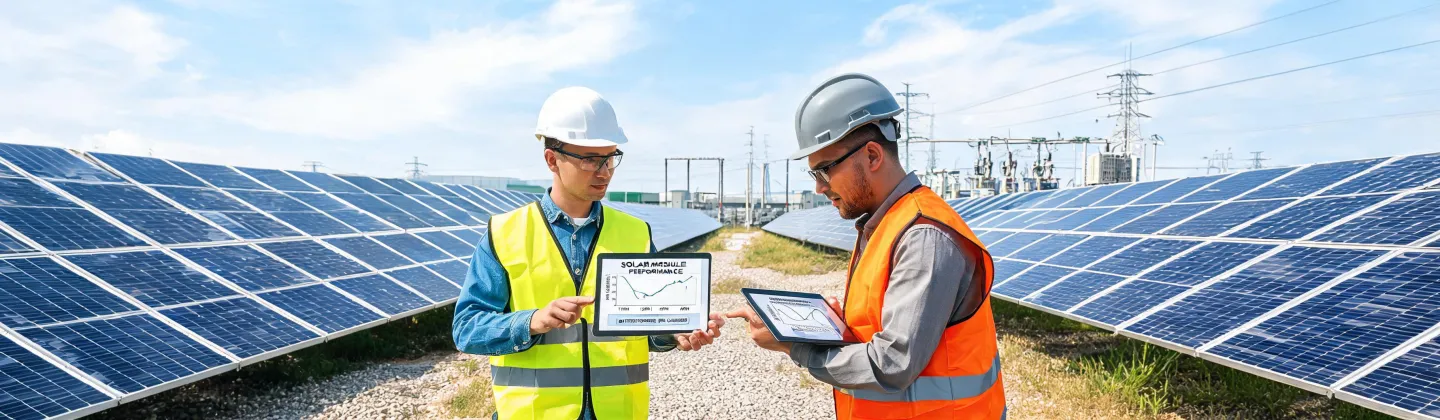
The JinkoSolar 630W panel is based on N-type technology. I'm not an engineer, but here's what I saw in practice. On a recent 500 kW rooftop installation, we used the 630W module. Compared to the 550W bifacial modules we used on a similar project, the 630W panels:
- Reduced racking costs by 18%: Fewer modules per watt means less racking, wiring, and labor.
- Shaved 10% off installation time: With a smaller crew, we commissioned the system in 19 days versus 22 days.
- Improved DC-to-AC ratio: The higher voltage output made pairing with our central inverter much easier.
The result? A levelized cost of energy (LCOE) that was 6% better than the alternative spec. For a 25-year system, that's a lot of savings.
Arizona Battery Storage News: Why This Matters Now
Arizona is a weird market for solar. We have tons of sun, but our net metering policies have been in flux. Last year, we saw a 40% increase in requests for PV systems with battery storage. The reason? Time-of-use rates are getting steeper, and backup power is a hot commodity. Our clients want to store cheap midday solar power and use it during the expensive evening peak.
The 630W module pairs exceptionally well with batteries because of its higher voltage and efficiency. With a central inverter and a few large battery cabinets, we can handle an entire building's critical load without a massive footprint. It makes the economics of battery storage work better.
Microinverter vs Central Inverter: The Great Debate (and Why I Choose Central)
This was a huge debate on our last project. I’ll be direct: for a commercial system with battery storage, a central inverter is almost always the better choice compared to microinverters.
Here’s my reasoning, based on managing 60-80 orders annually:
- Cost: Central inverters cost less per watt. For a 500 kW system, the savings were about $0.04/watt. That's $20,000.
- Maintenance: Microinverters are a nightmare to service when they fail (which they do). A central inverter is one box. If it fails, one truck roll, one swap. Done.
- Battery Integration: Most large battery systems (like Tesla Powerpack or Fluence) are designed for DC-coupled central inverters. Microinverters complicate the architecture and add inefficiencies.
That's not to say microinverters have no place. For a small residential roof with shading, they're great. But for a commercial PV system with battery storage? No contest. Central inverter, all the way. It's one of those things that the data on paper says is close, but real-world operational headaches tip the scales heavily.
When Tier 1 and 630W Aren't the Answer
I'd be lying if I said this is a universal solution. Here's where my advice falls apart:
- Ground-mount projects on tight budgets: If you have acres of land and the lowest possible up-front cost is your only metric, a cheaper Tier 2 module on a single-axis tracker might yield a better return. The 630W module's premium on space isn't as valuable when space is free.
- Residential roofs with complex shading: For a residential home, the 630W module is overkill. It's physically large, heavy, and harder to install. Microinverters with 400W modules are a better fit.
- If you don't plan on battery storage: A lot of the advantage of the 630W module (the high voltage, the DC ratio) is wasted if you're just grid-tied. A standard 540W module can do the job for less money.
Ultimately, the best panel is the one that fits your specific financial model and site constraints. But if you're a commercial property owner in Arizona looking at a PV system with battery storage, the JinkoSolar 630W module on a central inverter is a bundle I've come to trust. It's not perfect, but it's the most predictable.