
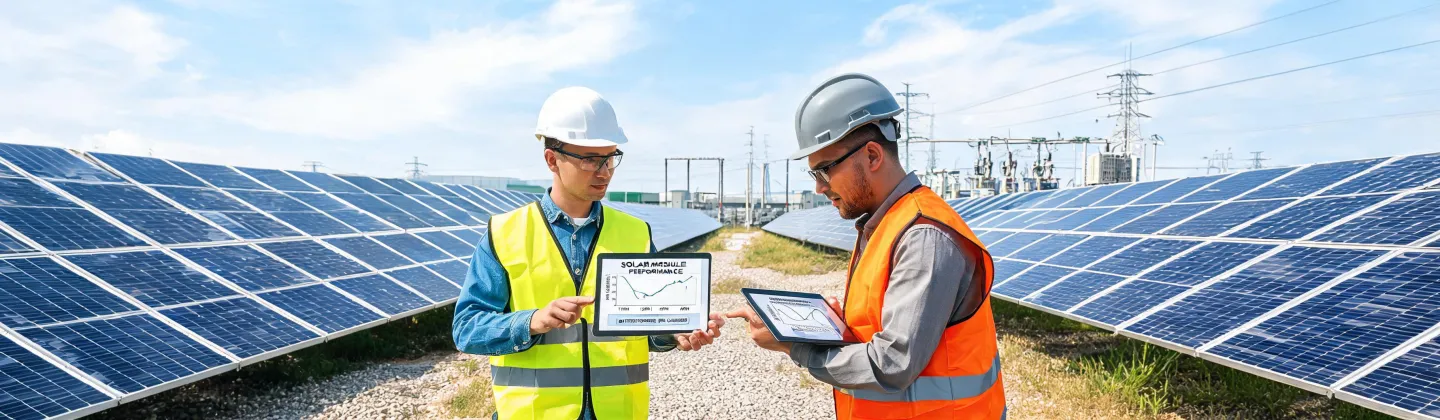
For years, my job was simple: get the lowest price per watt on solar panels. That was the metric. The goal. The thing I reported to my boss. I'd line up quotes from distributors, find the cheapest Jinko Solar panel that met the specs, and place the order. Simple math.
Then I started tracking what happened after installation. And the math got a lot less simple.
Here's a blunt take from someone who's reviewed over $180,000 in solar procurement over six years: The cheapest panel is almost never the cheapest system.
That trade-off—panel price vs. total system efficiency—is where the real money is. And it's why I've stopped obsessing over the Jinko Solar panels price list and started obsessing over the entire energy chain.
The Efficiency Argument That Changed My Mind
Look, I'm not an electrical engineer. I'm a procurement manager. I look at spreadsheets, not circuit diagrams. So when I tell you that N-type efficiency matters more than the upfront cost of a Jinko Tiger Neo panel, you can take it with a grain of salt. What I can tell you is what the spreadsheets showed.
In 2023, I compared two quotes for a 50kW rooftop system. Quote A used Jinko's standard Eagle series panels at a lower $/watt. Quote B used the Tiger Neo N-type panels at roughly 12% higher cost per panel. The vendor pushing Quote B kept talking about 'efficiency gains' and 'lower BOS costs'—which sounded like consultant-speak to me.
So I dug into the TCO. Here's what I found:
- Fewer panels needed: The Tiger Neo's higher efficiency (around 22-23% vs. 20-21%) meant we needed 14% fewer panels to hit 50kW. That's 14% less racking, less wiring, less labor on the roof.
- Lower inverter load: With fewer panels, we could use a slightly smaller inverter. That's a $1,500 saving on the inverter quote alone.
- Reduced land/roof area: In tight spaces, the higher density of the N-type panels meant the system fit on the roof without redesigning the layout. No rework cost.
When I ran the final numbers, Quote B's total installed cost was 4% lower than Quote A. The 'expensive' panels saved us money. Not ideal, but workable. Actually, more than workable—it changed how I evaluate every solar purchase now.
"The cheapest panel is almost never the cheapest system." — My new procurement rule, learned the hard way.
The Inverter and the Battery: Where the 'Cheap' Option Really Hurts
This logic doesn't stop at the panels. It applies to the entire system design—especially the inverter and the battery system. And this is where I see people make the biggest mistake.
I recently had a client ask: "Can I just use a Jinko Solar inverter with a 12V battery charge controller setup for an off-grid cabin? It's cheap." My answer? Probably not. But let me explain why.
A Jinko Solar panel—say, a 440W bifacial module—puts out a high voltage (around 40-50V Voc). A standard 12V battery charge controller is designed for much lower input voltages, typically from small 100W-200W panels. If you pair a high-voltage panel with a cheap 12V controller, you're likely to exceed the controller's input voltage limit. (Don't hold me to the exact number, but you'd probably blow the controller's internal regulator.)
The result? You buy a $30 controller, fry it in a week, then have to buy a $150 MPPT controller designed for high-voltage input. The 'cheap' option just cost you $120 more in rework. A lesson learned the hard way for a friend of mine—not my cabin, but I watched it happen.
Same logic applies to the inverter. A string inverter matched to high-efficiency Jinko panels will operate at a higher DC voltage, reducing wire losses and increasing system efficiency. A cheaper, generic inverter might not have the MPPT range to handle the higher voltage. You lose 5-10% of your generation right there. Over 20 years, that's a lot of lost kWh.
The 12V Charge Controller Trap
Here's a specific scenario I see often: someone wants to charge a 12V LiFePO4 battery from solar and looks for the cheapest charge controller. The question "how to charge LiFePO4 batteries" comes up constantly. And the answer isn't just 'buy a PWM controller.'
LiFePO4 batteries have a specific charging profile. They need a constant current/constant voltage (CC/CV) charge algorithm. A cheap PWM controller might not have the right absorption voltage setting. It'll either under-charge the battery (wasting capacity) or over-charge it (damaging the cells).
- Undercharged LiFePO4: You only get 70% of your battery's rated capacity. That's a $500 battery acting like a $350 one.
- Overcharged LiFePO4: You can trigger the battery's BMS protection, or worse, cause the cells to swell or fail. That's a $500 replacement.
The efficient solution: Spend the extra $30-50 on a quality MPPT controller that supports user-adjustable LiFePO4 charging parameters. The panel stays efficient, the battery stays healthy, and the system works. Efficient. Reliable. Cost-effective over time.
The Liquid Air Energy Storage Question (Yes, It's Related)
Now, I know what you're thinking: "We're talking about Jinko solar panels and charge controllers. Why are you mentioning liquid air energy storage?"
Fair point. I'm not an energy storage engineer, so I can't speak to the thermodynamics of cryogenic systems. But I can tell you what the trend means for procurement decisions. And the trend is clear: efficiency in storage is becoming as critical as efficiency in generation.
Major liquid air energy storage news from projects in the UK (like the one from Highview Power) shows that large-scale, long-duration storage is getting closer to commercial viability. What does that matter for a buyer of Jinko Solar panels?
Because if you're designing a system today—say, a commercial installation with a battery bank—you need to plan for the possibility that future storage technologies might be more efficient or cheaper. The panels you buy today need to be compatible with the inverters and storage systems of tomorrow. A high-efficiency panel with a high voltage rating and a robust warranty is a safer bet for future compatibility than a cheap, low-spec panel.
The industry is moving toward higher voltages (1500V systems), smarter inverters, and more advanced storage management. If you buy panels that are optimized for 1000V systems today, you might be stuck when the next generation of inverters and storage arrives.
I'm not saying buy the most expensive panel you can find. I'm saying buy the panel that gives you the most flexibility for the next 20-25 years. For me, that's usually a Jinko Tiger Neo with N-type technology—because the technology is proven, the efficiency is top-tier, and the warranty is solid.
The Procurement Rule I Use Now
After tracking 15+ solar installations over 6 years, I've developed a simple rule: Cost per kilowatt-hour over the system's lifetime, not cost per watt at purchase.
That means I now ask different questions when comparing Jinko Solar quotes:
- Panel efficiency: Does the higher efficiency reduce BOS costs and improve space utilization?
- Inverter compatibility: Does the panel's voltage and current profile match the inverter's MPPT range?
- Storage readiness: Is the system designed to integrate with modern LiFePO4 batteries or future storage tech?
- Warranty: Does the warranty cover the panel's performance over 25 years? (Jinko's is typically 30-year linear power output, which I've found reliable.)
You might argue that this approach is more complicated—and it is. It requires more analysis upfront. But in my experience, the time spent analyzing TCO upfront saves five times that in rework and replacement costs later.
"Efficiency isn't a luxury—it's a hedge against future costs." — My revised procurement maxim.
So here's my final opinion, shaped by years of mistakes and some good decisions:
Don't buy solar panels. Buy a solar system. The panel is the heart of it, but the inverter, the charge controller, the battery, the wiring, and the installation labor all matter. A cheap panel in an inefficient system is a waste of money. An efficient panel in a well-designed system is an investment that pays back year after year.
And if you're looking at Jinko Solar panels—whether the Tiger Neo, the Eagle, or the bifacial models—my advice is to look beyond the price list. Look at the efficiency, the warranty, and the system integration. That's where the real value is.
But hey, that's just my experience. I've been wrong before. (I assumed 'same specifications' across two panel brands would mean identical results. Didn't verify. Turned out each had slightly different voltage ratings. Cost us a day of rework.)
Learn from my mistakes. And then make your own, smarter decisions.