
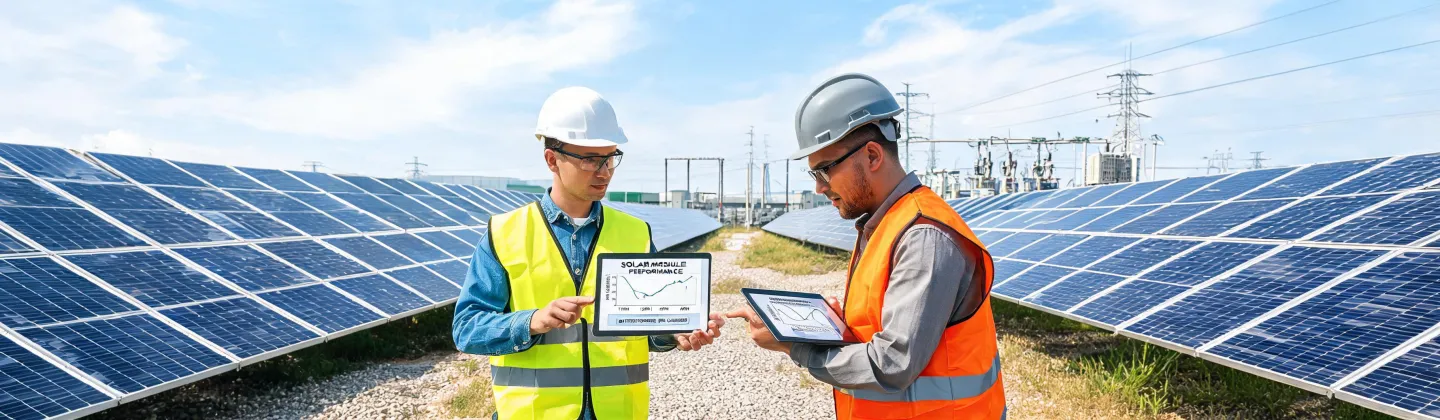
If you're a solar installer in Corona, California, and you're juggling a PV system with an EV charger install, here's the short version: a Jinko 400W mono solar panel (like from the Tiger Pro series) is your safest bet for balancing efficiency, availability, and cost right now.
I'm a project lead for a mid-sized renewable energy installer. We've put up over 2,000 systems in the last three years, from small residential to large commercial. I'm not a sales guy. I'm the guy who gets the call when the gear is wrong, the deadline is tight, or the client is panicking. So when I say a specific panel works, it's usually because I've had to make it work when everything else went wrong.
Take last month. A client in Corona needed a 7.6 kW system plus a Level 2 EV charger installed. Fine. Normal. The problem? The job spec got approved on a Friday, and the homeowner wanted it done by the following Thursday—a 5-day turnaround, including HOA approval and the city permit. Normal lead time for a 400W module order from a distributor is 10-14 days. For a specific charger? Same.
We had to shift gears fast. We swapped the originally specced 370W panels for a stock Jinko 400W (the Tiger Pro, N-type). Why? Because the distributor in Anaheim had 48 pallets of them sitting on the floor. They were available immediately. The 370W mono panels? A 3-week wait.
“ In a rush, the best module is the one you can get. But if you have a choice, the 400W Tiger Pro is the one I’d pick anyway.”
Why 400W Matters for the Installer (Not Just the Homeowner)
Here’s where a lot of the online advice gets it wrong. People get hung up on the efficiency percentage. Is it 21.5% or 22.1%? Does it matter? In a lab, sure. On a roof in Corona at 2 PM in July when the ambient temp is 105°F? Not really.
What actually matters to me as an installer is the wattage per square foot and the string compatibility. A 400W panel lets me install fewer panels for the same system size. That means less racking, less wire, less labor. On a standard 7.6 kW inverter, I need 19 of the 400W panels. If I use 370W panels, I need 21. That’s two extra panels, four extra feet of racking, and an extra hour on the roof. At our labor rate of $85/hour, that's real money.
Also, Jinko's 400W mono panels (the Tiger Pro series) use half-cut cells. If one cell gets shaded in the morning, the other half of the panel still produces. It's not a huge difference—maybe 5-10% on a single panel—but on a string of 19 panels, that's a whole panel's worth of production lost. I've seen it matter on tile roofs with weird vent pipe placements.
The 'Value Over Price' Trap (How We Lost $2,000)
Let me tell you about a job we did in Q1 2024. The client wanted the cheapest quote. We bid with a budget 360W panel from a lesser-known brand (not Jinko). We saved the client $1,200 on the modules. Sounded like a win.
Then we get to the install. The panels had a different junction box location than we expected. The wiring didn't align with our standard racking. We had to re-tap holes, buy longer cables, and lose half a day on the roof. The labor overrun was $1,800. Plus, the client called me a month later complaining about production. The optimizer data showed the string was clapped out because the voltage mismatch was worse than we thought. We had to send a tech out for a re-string. Another $400.
Bottom line: that $1,200 savings cost us $2,200 and a stressed-out client. We only use Jinko or Trina now (and I'm agnostic about the brand, but Jinko's availability is just better most of the time). The initial price is a trap. The TCO (total cost of ownership) is what matters.
How to Install a Solar Inverter (The Part That's Always Left Out)
Since we have the context of the Corona job, let's talk about the inverter install because everyone talks about the panels, but the inverter is where things break (Oh, and the EV charger install is a whole other headache—more on that in a sec).
There's a thousand YouTube videos on 'how to install a solar inverter.' They all show you the clean part: hanging the box, connecting the AC and DC. What they never show you is the 45 minutes you spend trying to find a code-compliant spot in a garage that's already full of junk and has a gas water heater 3 feet away.
For the Corona job, we used a standard string inverter (a Growatt, if I remember right—cost about $1,400). The key is the DC disconnect. If you are installing a solar inverter, always mount the DC disconnect within sight of the inverter. Everyone knows this. But the code changed in 2023 regarding where the rapid shutdown components can go. Make sure you check the 2023 NEC section 690.12. If you get that wrong, the city inspector (or HOA, in Corona's case) will fail you. Guaranteed.
“The biggest mistake I see? People mounting the inverter without accounting for the conduit run to the main panel. A 20-foot run of 1-inch PV wire is $2 a foot. Plus the conduit. Add that to your quote.”
The EV Charger Install in Corona: The Part Nobody Wants to Talk About
The client also wanted a Level 2 EV charger (48 amp, hardwired). And they wanted it done on the same day as the solar install. The challenge? The main panel in this 1980s Corona house was a 200 amp that was already loaded. Didn't have the capacity for a 50-amp breaker.
We back-fed the solar on a 40-amp breaker, but that was already in the plan. The EV charger? We had to install a load-shedding device (a DCC-10 or similar, cost about $600). This device monitors the main load and sheds the EV charger if the house is pulling too much power. It's not ideal, but it's the only way to avoid a $3,000 service upgrade. I should add that this required a separate permit inspection because it's technically a modification to the service.
Boundary Conditions: When 400W Panels Don't Make Sense
Look, I'm a fan of the 400W Jinko panel, but I'm not selling it. Here's when it's a bad call:
- You have a tiny roof with weird angles. If you need flexibility to fill odd-shaped spaces, a standard 60-cell panel (like a 330W) might fit better than a 72-cell 400W.
- You are doing a ground mount with free space. The cost-per-watt on a 400W vs a 500W panel is a real consideration. If you have the land, sometimes bigger (like 600W utility panels) is cheaper per watt, but those are harder to source.
- Your inverter maxes out at a lower voltage. On a small system, a 400W panel might be overkill and limit your string design.
As for the EV charger install in Corona—verify your local utility's rules. SCE has some weird time-of-use and demand charge requirements. I'm telling you from experience (circa mid-2024), they changed the meter requirements for charger-only installs. Nothing stays static.