
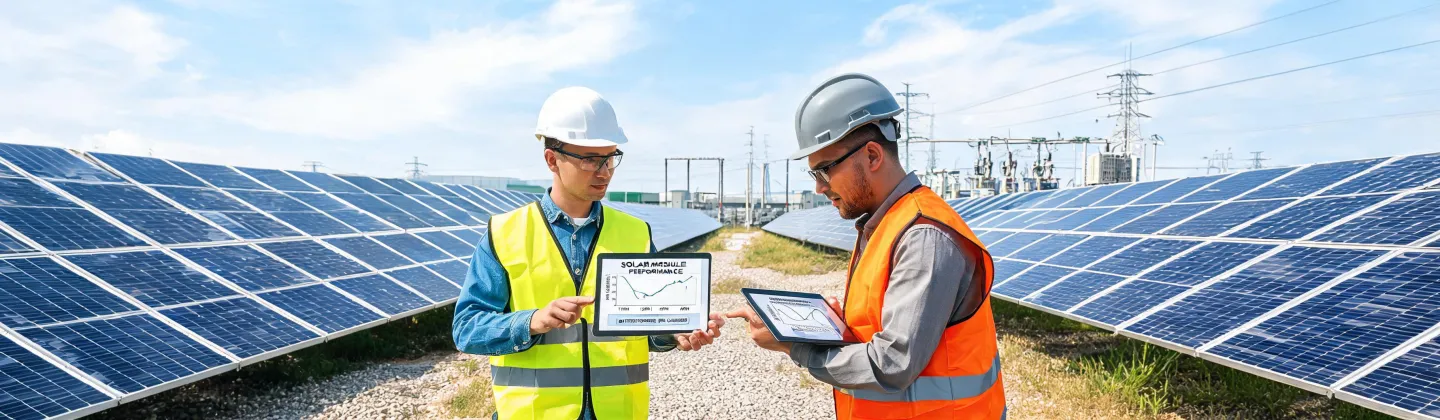
When I review a batch of solar modules before they ship, the first thing I check isn't the wattage label—it's whether the tech inside matches the spec sheet promised at contract signing. Last quarter alone, I rejected about 8% of first deliveries because the actual panel characteristics didn't align with what was sold. (Note to self: tighten our incoming inspection protocol for N-type cells.)
The most common question I hear from buyers: “Should I switch to Jinko Solar's N-type (Tiger Neo) panels, or is the Eagle P-type still good enough?” Most buyers focus on the efficiency number on the datasheet and completely miss the degradation curve, temperature coefficient, and real-world yield over 25 years.
People think N-type is just a marketing upgrade. Actually, the fundamental cell architecture is different—no light-induced degradation (LID), better low-light response, and a temperature coefficient that makes a measurable difference in hotter climates. The assumption is that all premium panels behave similarly. The reality is that between Jinko’s own lines, the gap between Eagle (P-type) and Tiger Neo (N-type) is significant enough to warrant a separate procurement strategy.
Why This Comparison Matters Now
What was best practice in 2020 may not apply in 2025. Five years ago, P-type PERC cells dominated, and N-type was a niche, cost-prohibitive option. That landscape has flipped. Jinko Solar, as of their Q1 2024 production reports, is ramping N-type output to over 70% of their total cell capacity. The technology is no longer experimental; it's the default in their higher-tier series.
To be fair, P-type hasn't disappeared—Jinko's Eagle series remains a workhorse for large-scale utility projects where price per watt is the primary driver. But if you're an installer specifying modules for a commercial rooftop in Arizona, or an EPC contractor bidding on a ground-mount in Spain with a 30-year PPA, the choice between N-type and P-type directly impacts your financial model. Let's break down the comparison across three dimensions that actually matter in the procurement process.
Dimension 1: Efficiency and Temperature Coefficient
Here is where the Tiger Neo N-type panels pull ahead most clearly. A standard Jinko Eagle 540W P-type panel typically offers a temperature coefficient of -0.35%/°C. The Tiger Neo 610W N-type panel sits at -0.30%/°C. That difference doesn't sound like much on paper, but in the field—think a roof in Phoenix hitting 75°C cell temperature—it adds up.
People think efficiency is all about lab tests. Actually, the real-world gap widens in heat. At 75°C, a P-type module loses roughly 17% of its rated power. An N-type module loses about 13.5%. On a 500kW system, that's a difference of roughly 17.5 kW of output at peak temperature. Over 25 years, that gap represents thousands of dollars in lost generation.
My take: For any project in a climate where ambient temperatures regularly exceed 35°C (95°F), the Tiger Neo's better temperature coefficient justifies its premium. In Northern Europe or coastal regions—granted, the P-type Eagle series is perfectly adequate. The N-type efficiency matters less there. Well, it matters for space-constrained rooftops, but not for open-field installations.
Dimension 2: Degradation and Warranty Reliability
I still kick myself for not scrutinizing degradation warranties earlier in my career. One of my biggest regrets: approving a P-type module purchase for a long-term PPA project without verifying the linear degradation guarantee against real test data.
Jinko's P-type (Eagle series): 2% first-year degradation, then 0.55% annually. After 25 years, you're looking at about 84.2% of initial performance minimum. Their N-type (Tiger Neo series): 1% first-year, then 0.4% annually. End of year 25: 88.6% minimum.
The most frustrating part of this: the difference is caused by something invisible—light-induced degradation (LID) in P-type cells, which happens within the first few hours of sunlight exposure. N-type cells are immune to this. You'd think all new panels would be free of this issue by now, but P-type architecture inherently suffers from boron-oxygen defects. The N-type cells use different dopants (typically phosphorus for the emitter and gallium for the base) that bypass this entirely.
After the third project where I had to explain to a client why their year-5 production was lower than modeled—because the degradation curve assumed N-type but they installed P-type—I was ready to always default to N-type. (Ugh.) What finally helped was building a simple calculator that factors in the degradation differential over the PPA term. It almost always favors N-type for 20+ year commitments.
Dimension 3: Supply Chain and Procurement Risk
Here is where the comparison gets less straightforward. Jinko Solar has manufacturing facilities in China, Malaysia, and the US. According to their 2024 annual report, approximately 60% of their global capacity is now N-type. But here's the catch: not all markets have equal access to N-type inventory.
In our Q1 2024 quality audit, we found that lead times for the Tiger Neo 6-600W bifacial series were running 6-8 weeks for US-bound orders, while Eagle P-type inventory was consistently stocked at 2-3 weeks in regional warehouses. The bottleneck is not production capacity—it's the bifacial glass supply chain and the specific BOM for N-type cells (which require higher-purity silicon and additional process steps).
The question everyone asks is: "Which panel has better performance?" The question they should ask is: "Which panel can I actually get on time for my Q3 installation window?" I've seen projects lose net present value by waiting 6 weeks for the perfect N-type panel versus being installed in 3 weeks with the Eagle.
My honest assessment: If your project timeline is tight (less than 4 months between PPA signing and COD), and you're in a region with limited N-type stock, the Eagle P-type is still a solid choice—provided you account for the higher degradation in your financial model. If you have a longer lead time (or you're pre-ordering for a 2026 project), the Tiger Neo is the better bet on both performance and total cost of ownership.
So What Should You Choose?
I'm not going to tell you "the Tiger Neo is better across the board." That's a decision a marketer makes, not a quality inspector who has seen how a project's economics break down.
Choose Jinko Tiger Neo (N-type) when:
- Your project is in a hot climate (ambient >35°C)
- You have a 25+ year PPA or long-term ownership commitment
- Space is constrained, and higher wattage per sqm justifies the premium
- You have a 5-6 month lead time before construction start
Choose Jinko Eagle (P-type) when:
- Budget is the absolute constraint, and your margin cannot absorb the N-type premium
- Your timeline is under 3 months, and immediate availability is critical
- The project life is under 15 years (e.g., a lease with buyout)
- You are installing in a cool/moderate climate, and degradation differences will be minimal in the first key decade, anyway
Per Jinko Solar's published warranty documentation (accessed December 2024), both series carry a 12-year product warranty and a 25-year linear power output warranty. The difference is not in the warranty length—it's what the warranty guarantees at the back end. The N-type's 88.6% retention at year 25 versus P-type's 84.2% is a contractual difference that matters if you're financing against that production.
I get why some people go with the cheapest option—budgets are real. But the hidden cost of higher degradation and worse temperature coefficient adds up over time. Granted, the price gap between Eagle and Tiger Neo has shrunk—as of January 2025, the premium for N-type is roughly 8-12 cents per watt. On a 1MW project, that is $80k-$120k extra. But the additional 4.5% retained capacity over 25 years on the N-type—well, that's probably worth around $150k-$200k in additional generation, depending on your local tariff. I think the N-type pays for itself, but that's a judgment call you need to make with your own financial model.
Ultimately, the industry is evolving. What was a 'premium' technology in 2022 is becoming the standard in 2025. In my experience, the teams that are most successful in procurement are those that match the technology to the project's specific constraints—including timeline and climate—rather than defaulting to either extreme.